 Copenhagen AirportAirport35 km
Trelleborg
Trelleborg – Sweden’s Southern Gateway by the Baltic Sea
Introduction: Where Sweden Begins
The first thing I notice when arriving in Trelleborg is the sense of movement. Ferries glide in from Germany and Poland, cyclists roll along coastal paths, and seabirds circle above the harbor. Situated at Sweden’s southernmost point, Trelleborg has long been a place of arrivals and departures. Yet beyond its role as an important port city, it reveals a quieter side: broad beaches, open farmland, Viking history, and a relaxed coastal atmosphere that feels distinctly southern Scandinavian.
Walking through the town center, the sea is never far away. Cafés spill onto pedestrian streets during the warmer months, while colorful flower displays have earned Trelleborg recognition as one of Sweden’s most beautifully maintained towns. The surrounding landscape is characterized by fertile plains that stretch toward the horizon, creating a unique contrast between agricultural traditions and maritime heritage. For travelers exploring southern Sweden, Trelleborg offers a compelling introduction to the region's culture, history, and coastal lifestyle.
A Viking Legacy Beneath Modern Streets
Trelleborg’s name is closely connected to its Viking past. The city is home to a reconstructed Viking ring fortress known as Trelleborgen, inspired by archaeological discoveries made in the area. Walking through the site provides a vivid glimpse into life more than a thousand years ago, when fortified settlements played a strategic role across Scandinavia.
The Viking heritage remains an important part of local identity. Throughout the year, historical events and cultural activities bring this era to life, connecting visitors with the maritime traditions that helped shape southern Sweden. The blend of ancient history and modern urban life gives Trelleborg a distinctive character that sets it apart from many other coastal destinations.
Southern Sweden’s Coastal Landscape
Trelleborg lies in Skåne County, Sweden’s southernmost region. The municipality is home to around 45,000 residents, while the town itself has a population of approximately 30,000. Unlike the rocky coastlines often associated with Scandinavia, the landscape here is defined by sandy beaches, rolling fields, and expansive skies.
The coastline offers numerous opportunities for walking, cycling, and enjoying the Baltic Sea. Nearby beaches such as Böste and Skateholm attract visitors seeking a more tranquil seaside experience. Inland, fertile farmland produces much of Sweden’s agricultural output, creating a patchwork of fields that change dramatically with the seasons.
Climate and the Best Time to Visit Trelleborg
Thanks to its southern location and maritime influence, Trelleborg enjoys one of Sweden’s mildest climates. Summers are generally pleasant, with temperatures often ranging between 20°C and 25°C, making the season ideal for beach visits, cycling excursions, and outdoor dining.
Spring transforms the surrounding countryside with vibrant green fields and blossoming landscapes, while autumn brings softer light and quieter coastal walks. Winter remains relatively moderate by Swedish standards, though winds from the Baltic Sea can create a dramatic atmosphere along the waterfront.
For most travelers, the best time to visit Trelleborg is between May and September, when longer daylight hours allow ample time to explore both the coast and the surrounding region of Skåne.
Language, Currency, and Local Culture
Swedish is the official language, but visitors will find that English is widely spoken throughout Trelleborg, particularly in hotels, restaurants, and tourist attractions. The local currency is the Swedish Krona (SEK), although card payments are accepted almost everywhere, reflecting Sweden’s highly digital economy.
The culture of Trelleborg reflects both its maritime connections and its southern Swedish roots. There is a noticeable openness and practicality in everyday life, balanced by a strong appreciation for community, nature, and seasonal traditions. The proximity to continental Europe has also influenced the city, making it one of Sweden’s most internationally connected destinations.
Beyond the Port: Exploring the Surrounding Region
Many travelers know Trelleborg primarily as a ferry hub, but staying a little longer reveals its strategic location for exploring Skåne. From here, visitors can easily reach the university city of Lund, the vibrant urban scene of Malmö, and the dramatic coastline of the Österlen region.
The surrounding countryside is dotted with historic churches, manor houses, farm shops, and cycling routes that showcase a slower, more authentic side of southern Sweden. Whether exploring coastal villages or enjoying fresh local produce, the region rewards curiosity and unhurried travel.
Why Trelleborg Deserves a Place on Your Sweden Itinerary
Trelleborg offers more than a convenient entry point to Sweden. It combines Viking history, Baltic Sea scenery, fertile countryside, and a welcoming small-city atmosphere into a destination that feels both accessible and genuine. For travelers seeking to experience southern Sweden beyond the major cities, Trelleborg provides a memorable blend of heritage, nature, and everyday Scandinavian life that lingers long after the journey continues north.
Trelleborg
Trelleborg, Sweden
Trelleborg is Sweden’s southernmost town, located on the Skåne coast. It is best known for its Viking heritage, long Baltic beaches, cycling-friendly countryside, and major ferry connections to Germany, Poland, and Lithuania. The atmosphere is relaxed and authentic, making it an excellent base for active travelers who enjoy coastal sports, cycling, hiking, and cultural excursions. ([visittrelleborg.se][1])
1) Sport & Action
Coastal Cycling Around Söderslätt
The flat agricultural landscape surrounding Trelleborg is one of Sweden's best regions for recreational road cycling. Quiet roads pass through open farmland, traditional villages, windmills, and coastal viewpoints.
Kitesurfing & Windsurfing
- Kämpinge Beach (northwest of Trelleborg): Wide sandy beach with good wind exposure and shallow water sections.
- Skanör-Falsterbo Peninsula (30–40 min drive): One of Scandinavia's most famous wind sports areas, offering reliable summer conditions and extensive sandy beaches.
Rental equipment and lessons are generally available during the warmer months, with kite packages typically costing SEK 900–1,800 (€80–160) per day and lessons SEK 1,500–3,500 (€130–300).
Beach Activities
- Skanör Beach and Mossbystrand offer long sandy coastlines, ideal for swimming, beach running, paddleboarding, and relaxation.
- Summer sea temperatures usually range from 18–22°C.
Viking Heritage Sports Experience
Trelleborgen, the reconstructed Viking ring fortress in the town center, occasionally hosts historical demonstrations and themed events linked to Viking-era skills and outdoor activities. ([Svenska Destinationer][2])
2) Excursions & Discoveries
Smygehuk
Sweden's southernmost point, approximately 15 km southeast of Trelleborg. The small harbor, sea views, art installations, and coastal atmosphere make it one of Skåne's most iconic destinations. Excellent for sunset walks and photography. ([Trelleborgs kommun][3])
Trelleborgen
A reconstructed Viking fortress connected to King Harald Bluetooth's Viking kingdom. The site includes exhibitions and reconstructed buildings that bring Scandinavian history to life. ([Svenska Destinationer][2])
Gislövs Läge
A charming traditional fishing harbor east of town with small boats, a peaceful waterfront, and excellent coastal scenery.
Malmö Day Trip
Only about 35 minutes away by train. Explore:
- Malmö Old Town
- Turning Torso
- Ribersborg Beach
- Modern Scandinavian food and shopping
Ystad & Österlen
About 45–60 minutes east. This region is known for picturesque villages, rolling countryside, art galleries, beaches, and local food producers.
3) Hiking
Smygehamn – Trelleborg (Skåneleden Trail)
- Start: Smygehamn
- Distance: ~17 km
- Elevation Gain: Minimal
- Difficulty: Easy–Moderate
- Terrain: Coastal paths, gravel tracks, beach sections
- Experience: Open Baltic Sea views, fishing villages, beaches, and peaceful countryside. Part of the famous Skåneleden long-distance trail. ([Wikipedia][4])
Trelleborg Coastal Walk
- Start: Trelleborg Harbor
- Distance: 8–12 km
- Elevation Gain: Negligible
- Difficulty: Easy
- Terrain: Promenades and coastal trails
- Experience: Sea views, harbor activity, beaches, and the distinctive palm-lined sections of town.
Smygehuk Nature Walk
- Start: Smygehuk Harbor
- Distance: 5–8 km
- Elevation Gain: Minimal
- Difficulty: Easy
- Terrain: Coastal grasslands and shoreline paths
- Experience: Wide horizons, seabirds, and southern Baltic scenery.
4) Cycling Routes
Trelleborg – Smygehuk Coastal Route
- Distance: 30 km round trip
- Surface: Road cycle paths and paved roads
- Difficulty: Easy
- Elevation: Mostly flat
- Experience: Coastal villages, sea views, and Sweden's southernmost point.
Trelleborg – Falsterbo Loop
- Distance: 60–80 km
- Surface: Road
- Difficulty: Moderate
- Elevation: Flat to rolling
- Experience: Beaches, bird reserves, dunes, and charming coastal communities.
Söderslätt Countryside Circuit
- Distance: 50 km
- Surface: Road
- Difficulty: Easy–Moderate
- Elevation: Very little climbing
- Experience: Vast agricultural landscapes, traditional farms, and classic Skåne scenery.
Bike rentals generally cost SEK 250–500 (€20–45) per day for standard bikes and SEK 500–1,000 (€45–90) for e-bikes.
5) Culinary Experiences
Trelleborg's food scene focuses heavily on:
- Fresh Baltic seafood
- Smoked fish
- Swedish pastries and cafés
- Local dairy products
- Seasonal produce from Söderslätt farms
Main Dining Areas
- Town center around the market square
- Harbor district
- Smygehuk harbor area
- Coastal villages east of town
Typical Prices
- Breakfast: SEK 80–180 (€7–16)
- Casual lunch: SEK 120–220 (€11–20)
- Casual dinner: SEK 180–350 (€16–32)
- Fine dining: SEK 500–1,000+ (€45–90+)
Drinks
- Coffee: SEK 35–55 (€3–5)
- Beer: SEK 70–110 (€6–10)
- Glass of wine: SEK 90–160 (€8–14)
- Bottle of wine: SEK 350–900 (€30–80)
Local specialties include smoked fish, herring preparations, shrimp sandwiches, cinnamon buns, and regional rapeseed-based products.
6) Season & Timing
May–September
Best overall period for:
- Cycling
- Hiking
- Beach activities
- Kitesurfing
- Outdoor sightseeing
Temperatures:
- Spring: 10–18°C
- Summer: 18–27°C
October–April
- Fewer tourists
- Dramatic coastal scenery
- Good for cultural visits and hiking
- Cooler temperatures (0–10°C)
Wind Conditions
The Baltic coast is frequently windy, particularly during spring and autumn, creating excellent conditions for wind sports.
7) Equipment & Rentals
Available locally:
- Bicycles
- E-bikes
- Paddleboards (seasonal)
- Windsurf and kite equipment (regional providers)
Typical Prices
- Bike rental: SEK 250–500/day
- E-bike rental: SEK 500–1,000/day
- SUP rental: SEK 250–500/day
- Kite lesson: SEK 1,500–3,500
Advance booking is strongly recommended, especially during summer weekends and holiday periods. Availability of bikes, watersports equipment, rental cars, and instructors can change significantly depending on weather and seasonal demand. Last-minute bookings may result in higher prices or limited availability.
8) Logistics
Nearest Airports
Malmö Airport (MMX)
- Distance: ~30 km
- Transfer: 25–35 minutes by car
- Taxi: SEK 500–900
- Rental cars available
Copenhagen Airport (CPH)
- Distance: ~85 km
- Transfer: 1–1.5 hours by train/car
- Train via Malmö is usually the easiest option
Train Access
Direct regional trains connect:
- Malmö ↔ Trelleborg (~35 minutes) ([Wikipedia][5])
Car Rental
Highly recommended for:
- Exploring Österlen
- Coastal villages
- Falsterbo Peninsula
- Rural cycling routes
Rental cars generally start from SEK 400–900/day depending on season.
Because ferry traffic and summer tourism can create demand spikes, booking rental cars in advance is advisable.
9) Shopping
Trelleborg Town Center
A compact shopping area with Scandinavian fashion, outdoor gear, cafés, and local specialty stores.
Smygehuk Artisan Shops
Small-scale craft shops selling:
- Local ceramics
- Glassware
- Handmade textiles
- Coastal-themed design products
Malmö (Day Trip Shopping)
For broader retail options:
- Emporia Shopping Center
- Södergatan shopping streets
- Scandinavian design stores
Recommended Local Products
- Skåne rapeseed oil (SEK 80–200)
- Handmade ceramics (SEK 150–1,000+)
- Local jams and preserves (SEK 50–120)
- Swedish wool products (SEK 300–1,500)
- Outdoor gear from brands such as Fjällräven, Houdini, Haglöfs, and Lundhags
Outdoor & Cycling Gear
The region is well supplied with outdoor retailers where visitors can purchase:
- Cycling clothing
- Rain gear
- Hiking equipment
- Scandinavian outdoor apparel
Notice: Prices, transport conditions, healthcare access, regulations, opening hours, and public services may change over time. Travelers should verify important details with official local sources before making final travel decisions.
Trelleborg
Best Day Trips from Trelleborg: 10 Scenic Excursions Within 1.5 Hours
1. Ystad and the Old Hanseatic Streets
About 35 minutes by car east of Trelleborg, Ystad feels noticeably different from the modern port atmosphere. Narrow cobbled lanes wind between crooked timber-framed houses, and the town has a slower rhythm that is especially enjoyable in the early morning before day visitors arrive.
The walk along the harbor is pleasant, but the real charm lies in wandering the residential streets where roses climb over centuries-old façades and cafés spill onto quiet squares.
Public transport: Frequent regional trains take around 30–40 minutes. The station is within easy walking distance of the historic center, making this one of the easiest car-free excursions.
2. Ales Stenar and the Clifftops of Kåseberga
After roughly 50 minutes on the road, the landscape opens into one of southern Sweden's most striking coastal settings. Ales Stenar, the famous stone ship monument, stands high above the Baltic Sea where wind, sky, and water dominate the experience.
The approach walk from Kåseberga is short but memorable. Visiting in the late afternoon often brings softer light and fewer visitors, while the sea views stretch for miles on clear days.
Public transport: Bus connections from Trelleborg usually require a transfer in Ystad and can take 1.5–2 hours. Possible without a car, but significantly easier when driving.
3. Söderåsen National Park
Within about 1 hour and 15 minutes by car, southern Sweden changes character completely. Deep forested ravines, steep slopes, and quiet lakes create scenery many visitors do not expect to find in Skåne.
The hiking trails around Skäralid offer some of the region's most rewarding walks. The elevated viewpoints are particularly attractive during autumn when the forest turns copper and gold.
Public transport: Train and bus combinations typically take 1.5–2 hours depending on connections. A workable day trip, though a car provides much greater flexibility.
4. Falsterbo and the Southwestern Peninsula
The drive takes around 40 minutes, passing open farmland before reaching a narrow stretch of land surrounded by sea on both sides.
Falsterbo combines broad beaches, birdlife, elegant villas, and a relaxed coastal atmosphere. Even outside summer, the area feels refreshing thanks to the constant sea breeze and wide horizons.
Public transport: Buses from Trelleborg generally take around 60–75 minutes. The village and beach areas are accessible on foot from the bus stops.
5. Lund's Historic Center
After approximately 40 minutes by car, Lund offers a completely different experience focused on history, university life, and culture.
The cathedral dominates the skyline, but much of the enjoyment comes from wandering the older quarters where students cycle past medieval buildings and quiet gardens. Cafés tend to be lively throughout the year.
Public transport: Direct trains take about 30–40 minutes, making Lund one of the most convenient excursions from Trelleborg.
6. Stenshuvud National Park
Around 1 hour and 15 minutes by car northeast of Trelleborg lies a coastal landscape where forests meet orchards and the sea.
The climb to the summit is relatively short, but the view across the Baltic and surrounding countryside feels surprisingly expansive. Spring and early summer are especially pleasant when wildflowers cover parts of the reserve.
Public transport: Reaching the park by bus and train generally takes around 2 hours and often includes a walk from the nearest stop. Better suited to travelers with a car.
7. Kivik and the Apple Country of Österlen
The drive takes roughly 1 hour and 20 minutes, passing through some of Skåne's most attractive rural scenery.
Kivik is known for orchards, coastal views, and a slower pace that encourages lingering. Small farm shops and cafés dot the surrounding countryside, and the roads themselves are part of the appeal.
Public transport: Train and bus combinations usually require around 2 hours or more. A car allows you to explore the surrounding villages far more easily.
8. Malmö's Coastal Outskirts and Ribersborg Area
About 35 minutes by car from Trelleborg, Malmö provides urban energy without requiring a long journey.
While the city center attracts many visitors, the waterfront promenades and sea-facing areas offer a particularly enjoyable day out. Evening walks along the coast often provide excellent views across the Öresund toward Denmark.
Public transport: Frequent trains take approximately 25–30 minutes, with excellent local transport connections throughout the city.
9. Bosjökloster and Lake Ringsjön
After around 1 hour by car, you'll reach one of Skåne's most atmospheric historic estates overlooking Lake Ringsjön.
The gardens, lakeside setting, and historic buildings create a peaceful destination that feels removed from the busier coastal routes. The surrounding countryside is especially attractive during late spring and summer.
Public transport: Train and bus connections generally take 1.5–2 hours and may involve some walking from the nearest stop.
10. Simrishamn and the Österlen Coast
Within about 1 hour and 20 minutes on the road, Simrishamn offers a distinctive maritime atmosphere shaped by fishing traditions and colorful streets.
The harbor remains active, and the town feels lived-in rather than designed purely for visitors. Combining Simrishamn with a drive through nearby villages and coastal roads makes for one of the most rewarding full-day excursions in southern Sweden.
Public transport: Direct and connecting trains usually take around 1.5 hours. The station is close to the town center, making it one of the easier destinations in Österlen to reach without a car.
Trelleborg
Trelleborg, Sweden
Historical & Context Overview
Trelleborg is Sweden’s southernmost city, located in Skåne County on the Baltic Sea coast. The settlement has Viking-age roots, with evidence of a circular Viking fortress dating from around the late 10th century, while the city itself was first mentioned in written records in 1257. ([Wikipedia][1])
The city proper has approximately 31,000 inhabitants, while Trelleborg Municipality has around 47,000 residents. ([Wikipedia][2]) The municipality forms part of the Greater Malmö and Öresund economic region, one of Scandinavia's most important cross-border metropolitan areas. ([GuidebookSweden][3])
Nearby towns and cities include:
- Malmö: ~30 km north, population ~360,000
- Lund: ~45 km north, population ~95,000
- Ystad: ~45 km east, population ~20,000
- Vellinge: ~20 km northwest, population ~38,000
Trelleborg is primarily known as an important ferry and logistics hub linking Sweden with continental Europe. The atmosphere is generally relaxed, residential, and less tourist-oriented than Malmö or Lund.
Getting Around & Mobility
Trelleborg is compact and relatively flat.
Walking:
- Most central areas can be crossed within 15–25 minutes.
- The city center is pedestrian-friendly.
Cycling:
- Excellent cycling infrastructure.
- Bicycle rentals typically cost €10–20 per day.
- Locals use bikes year-round.
E-scooters:
- Availability can vary seasonally.
- Typical costs: €1 unlock fee + €0.15–0.30 per minute.
Cars:
- Renting a small car usually costs €35–70 per day.
- Parking is generally easier and cheaper than in larger Swedish cities.
- Expect parking fees of €0.50–2 per hour in central areas.
Public Transport & Taxis
Regional trains connect Trelleborg with Malmö in approximately 30–40 minutes.
Typical fares:
- Trelleborg–Malmö: approximately €8–12 depending on ticket type.
- Local bus journeys: approximately €2–4.
Ticketing:
- Digital ticket purchases are common.
- Cash payments on buses are often unavailable.
Taxis:
- Base fare: approximately €4–7.
- Typical city ride: €10–20.
- Trelleborg to Malmö Airport area: approximately €35–60.
A common visitor mistake is assuming cash can be used everywhere on public transport. Sweden is largely cashless.
Costs & Everyday Prices
Trelleborg is slightly cheaper than Stockholm but similar to many southern Swedish towns.
Typical prices:
- Coffee: €2.50–4
- Bakery item: €2–4
- Fast-food meal: €8–12
- Casual restaurant meal: €12–22
- Three-course dinner: €35–70
- Grocery store sandwich: €3–6
- Bottle of water: €1.50–3
Supermarkets:
- Usually open 07:00–22:00.
- Some open earlier or later.
Public toilets:
- Usually €0–1.
- Often available at transport hubs, shopping areas, and larger public facilities.
Food Culture & Eating Habits
Southern Sweden has strong agricultural traditions.
Typical habits:
- Lunch is commonly eaten between 11:30 and 13:00.
- Dinner is usually earlier than in Southern Europe, often between 17:30 and 19:30.
- Coffee breaks are an important social tradition.
Many restaurants reduce opening hours on Sundays and during winter months.
Tap water is excellent and safe to drink throughout the city.
Payments & Tipping Culture
Sweden is among Europe's most cashless countries.
Payment methods:
- Contactless cards are accepted almost everywhere.
- Mobile payments are common among locals.
- Some businesses may not accept cash at all.
Tipping:
- Not mandatory.
- Service is included in prices.
- Rounding up or leaving 5–10% for excellent service is appreciated but not expected.
Safety
Trelleborg is generally considered a safe city.
Common issues:
- Bicycle theft.
- Pickpocketing is uncommon but possible at transport hubs and ferry terminals.
- Late-night disturbances occasionally occur around bars on weekends.
Emergency number:
- 112
The city feels particularly calm during weekdays and outside summer ferry traffic peaks.
Healthcare
Healthcare standards are high.
Visitors from EU/EEA countries should carry their European Health Insurance Card (EHIC).
Typical costs:
- Emergency care fees vary depending on visitor status.
- Pharmacies are well distributed and generally open during business hours, with some extended-hour locations in larger nearby cities.
For serious emergencies:
- Call 112 immediately.
Practical Information
Language:
- Swedish is the official language.
- English proficiency is generally excellent.
Electricity:
- 230V, European Type C and F plugs.
Weather:
- Winters: 0–6°C, often windy.
- Spring: 5–15°C.
- Summer: 18–25°C, occasionally warmer.
- Autumn: 5–15°C.
Wind:
- Coastal winds can feel much colder than the temperature suggests.
- A light windproof jacket is useful during most of the year.
Walking & Cycling Norms:
- Cyclists often have dedicated lanes.
- Always check for bicycles before crossing paths.
- Pedestrians are expected to follow signals carefully.
Self-Service Systems:
- Self-checkouts are common in supermarkets.
- Many ticket machines and payment terminals require card payments.
- Digital receipts are increasingly common.
Pitfalls & Things to Be Aware Of
- Do not rely on cash. Some places may refuse it entirely.
- Public transport tickets should be purchased before boarding whenever possible.
- Coastal winds can make temperatures feel significantly colder than forecast.
- Many shops close earlier on weekends than visitors expect.
- Restaurant kitchens often stop serving before official closing time.
- Sunday evenings can feel very quiet compared with larger European cities.
- Bicycle lanes are heavily used; tourists sometimes accidentally walk in them.
- Taxi prices vary considerably, so checking the fare estimate beforehand is advisable.
- Ferry traffic can create temporary congestion near the port area.
- Public toilets are available but not as frequent as in many major tourist cities.
- During winter, daylight hours are short, while summer evenings remain bright much longer than many visitors anticipate.
- If continuing to Denmark or Germany, remember that transport schedules and ticketing systems differ between countries despite the close geographic proximity.
Notice: Prices, opening hours, transport services, regulations, healthcare arrangements, and other practical conditions may change over time. Travelers should verify important details with official and current sources before making final travel or transport decisions.
Trelleborg
Where Sweden Meets the Baltic Horizon
Stortorget and the City Center
The heart of Trelleborg is the area around Stortorget, the main square, where cafés spill onto the pavement during the brighter months and locals move between bakeries, shops, and the market hall at an unhurried pace. This is considered the city center and serves as the natural starting point for exploring. Most of central Trelleborg can be covered on foot within 10–15 minutes. The atmosphere feels distinctly southern Scandinavian, with broad streets, low-rise buildings, and a noticeable connection to the sea that is never far away.
Trelleborgen Viking Fortress
Just a few minutes' walk south of the center lies Trelleborgen, a reconstructed Viking ring fortress built on the site of a 10th-century stronghold. The grassy earthworks and timber structures create a surprisingly immersive sense of place, especially on a quiet morning when the sea breeze moves across the open grounds. The small museum helps place Trelleborg within the wider Viking world of the Baltic region.
Trelleborg Harbour and Waterfront
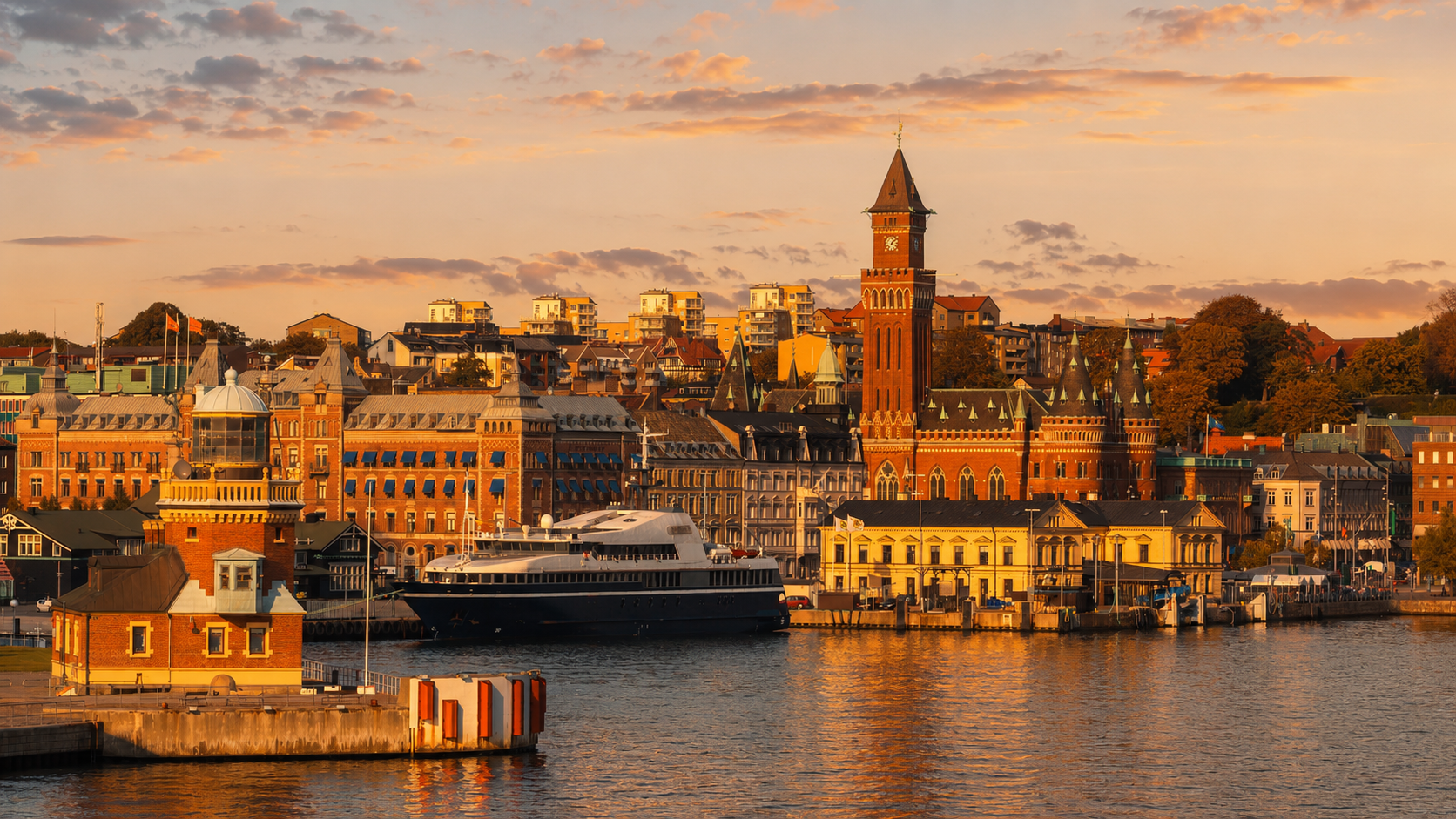
About 1 km from Stortorget, roughly a 15-minute walk, the harbour is one of Scandinavia's busiest ferry gateways. While ports are often overlooked by visitors, Trelleborg's waterfront reveals much about the city's identity. Ferries glide toward Germany and Poland, seabirds circle above the docks, and the horizon remains remarkably open. Evening walks here can be particularly rewarding when the low southern Swedish light reflects across the Baltic.
Stadsparken
Less than 500 meters from the city center, Stadsparken provides a green pause between urban streets and the coast. Mature trees, ponds, flowerbeds, and quiet pathways attract residents throughout the day. In spring and summer, the park becomes one of the most pleasant places to slow down with a coffee from a nearby café.
Trelleborg Museum
Located close to Stortorget, the city museum presents local history ranging from Viking settlements to maritime trade and regional culture. The exhibitions help explain why this relatively small city has long played an outsized role as Sweden's southern gateway.
Smygehuk
Around 15 km east of Trelleborg, roughly 20 minutes by car or accessible by local bus, Smygehuk marks the southernmost point of Sweden. The landscape feels expansive rather than dramatic: open farmland, windswept coastlines, fishing boats, and broad skies. Standing beside the famous marker, visitors often notice how much of the experience comes from the atmosphere rather than the monument itself. Early morning and sunset are particularly memorable here.
Beddingestrand
Approximately 20 km northeast of Trelleborg, around 25 minutes by car, Beddingestrand has a long sandy shoreline backed by dunes and pine trees. Unlike many heavily developed beach resorts, the area retains a relaxed, residential feel. On warm summer evenings, locals gather along the shore while the Baltic remains calm and surprisingly inviting for swimming.
Ystad
About 45 km east of Trelleborg, roughly 35–40 minutes by train or car, Ystad makes an excellent day trip. Its medieval street layout, half-timbered houses, and small squares create a completely different atmosphere from Trelleborg's more practical maritime character. The town is also known internationally as the setting for Henning Mankell's Wallander novels.
Falsterbo and Skanör
Located around 35 km west of Trelleborg, approximately 40 minutes by car, these neighboring coastal communities sit at the tip of the Falsterbo Peninsula. Wide beaches, white sand, colorful beach huts, and bird migration routes define the landscape. Late summer brings exceptional light and long evenings beside the sea.
The South Coast Road
One of the pleasures of staying in Trelleborg is simply driving along the coast. The route east toward Ystad passes fields of rapeseed in spring, small fishing villages, roadside farm shops, and stretches of open Baltic shoreline. The scenery is subtle rather than spectacular, but it reveals the character of Skåne better than almost any single attraction.
Hidden gems
Dalabadet Beach
Only about 3 km east of the center, Dalabadet is a local favorite for swimming and evening walks. The sandy shoreline feels surprisingly spacious, and sunsets often cast warm colors across the shallow Baltic waters.
Maglarps New Church Ruins
Roughly 8 km west of Trelleborg, the remains of this abandoned church stand alone in open farmland. The isolated tower rising above the fields creates one of the most atmospheric scenes in southern Sweden, particularly under changing skies.
Hörte Harbour
About 25 km east of Trelleborg, this small fishing harbour captures a quieter side of the coast. Fishing boats, weathered buildings, and sea air create a setting that feels far removed from the ferry traffic of the main port.
Local Bakeries Around Stortorget
Some of the most enjoyable moments in Trelleborg come from simple routines rather than landmarks. A morning cinnamon bun, strong coffee, and watching daily life unfold around the square often reveals more about the city than any museum. Arrive early, before the streets become busy, and you'll experience the calm rhythm that defines Sweden's southernmost city.
How to get here
Copenhagen AirportAirport35 km