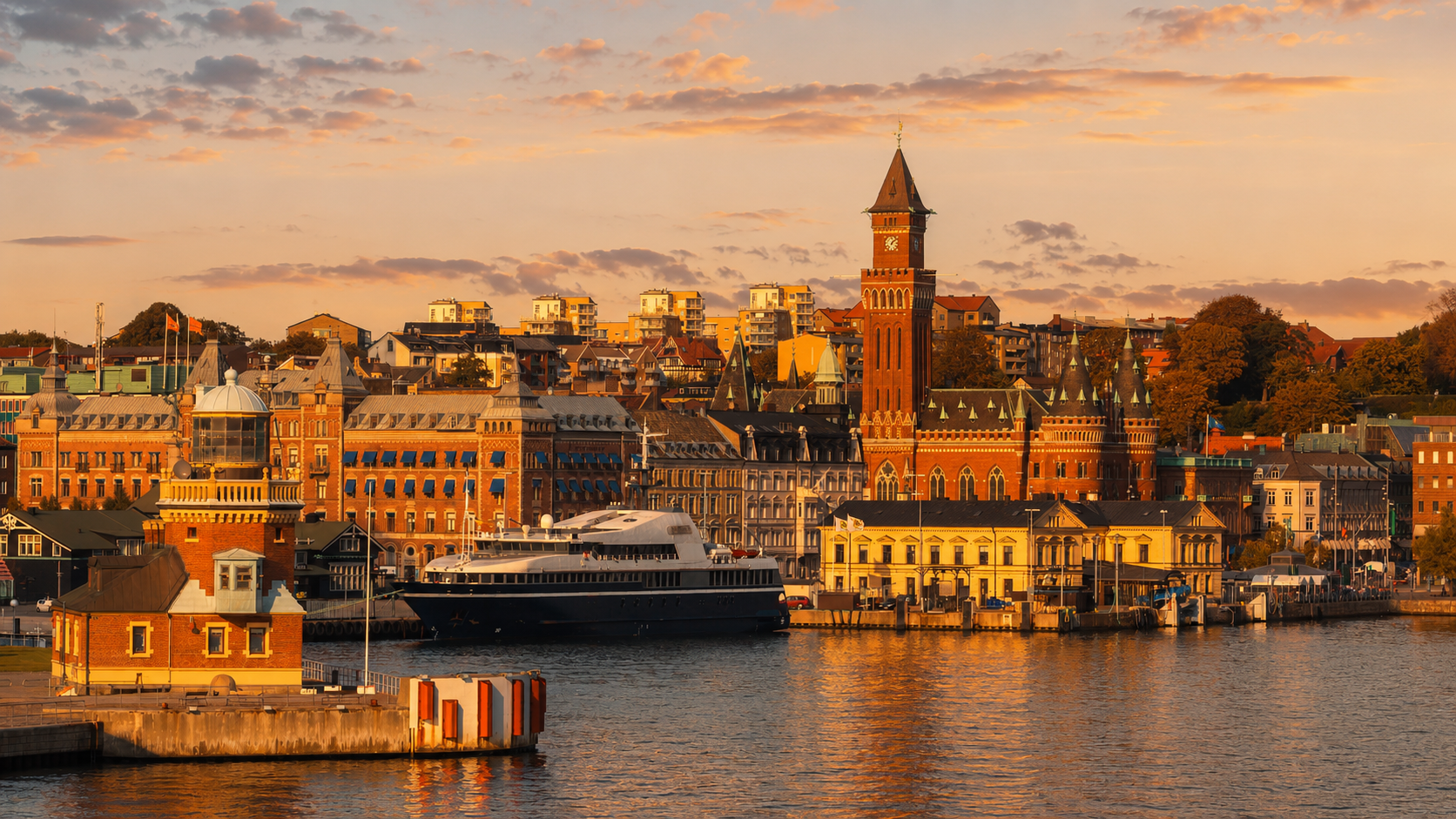
Sweden’s West Coast – Saltwater Horizons, Coastal Villages and Scandinavian Seaside Life
Sweden’s West Coast has a character all its own. Here, the North Sea meets a shoreline shaped by granite cliffs, sheltered bays, fishing harbours and thousands of islands. The air carries the scent of saltwater and seaweed, fishing boats move slowly between wooden jetties, and brightly painted houses stand close together along narrow streets. Life follows the rhythm of the sea, from early morning catches to long summer evenings when the last sunlight lingers over the water.
Stretching from the coastal landscapes of Halland through Gothenburg and north into Bohuslän, the Swedish West Coast offers a different side of Scandinavia. Sandy beaches give way to smooth granite rocks, lively seaside towns alternate with quiet island communities, and modern city culture sits comfortably alongside centuries-old maritime traditions.
 Photo by Peter Schulz on Unsplash
There is a particular pleasure in exploring this coastline without a strict itinerary. A ferry crossing becomes part of the experience, a small harbour café invites an unplanned stop, and a coastal road opens onto another view of the sea. Whether travelling for fresh seafood, swimming, sailing or simply the atmosphere of Sweden’s coastal communities, the West Coast rewards those who take their time.
Discover Sweden’s West Coast – From Halland to Bohuslän
Sweden’s western coastline extends along the Kattegat and Skagerrak, connecting broad sandy beaches in the south with the rocky archipelagos of the north. The region includes the coastal province of Halland, the city of Gothenburg and the historic province of Bohuslän, which reaches towards the Norwegian border.
Halland is known for its long beaches, rolling dunes and relaxed summer resorts. Around Varberg and Falkenberg, the landscape feels open and spacious, with sandy shores, coastal cycling routes and small towns where cafés and restaurants fill with visitors during the warmer months.
 Photo by Aron Fjell on Unsplash
Further north, Gothenburg marks a transition in both landscape and atmosphere. Beyond the city, the coast becomes increasingly fragmented, with islands, narrow channels and fishing villages built directly against the granite. Places such as Marstrand, Smögen, Fjällbacka and Grebbestad reveal the maritime identity that has shaped this part of Sweden for generations.
Gothenburg – The Cultural Gateway to Sweden’s West Coast
Gothenburg, Sweden’s second-largest city, is the natural starting point for many journeys along the western coast. Founded in 1621, the city developed into an important trading port, and its connection with the sea remains visible in its canals, waterfront districts and working harbour.
The city combines a lively cultural scene with an easygoing coastal atmosphere. In the historic Haga neighbourhood, cobbled streets lead past independent shops, traditional cafés and well-preserved wooden buildings. The aroma of freshly baked cinnamon buns drifts from café doorways, while the city’s restaurants celebrate the seafood brought ashore along the nearby coast.
 Photo by Steven Erixon on Unsplash
Gothenburg is also an excellent base for exploring the southern archipelago. Islands such as Styrsö, Brännö and Vrångö are accessible by passenger ferry, offering walking trails, swimming spots and peaceful villages where cars are absent from much of everyday island life.
Despite its urban character, Gothenburg never feels far removed from nature. Within a short journey, city streets give way to rocky shorelines, forest paths and open sea.
Bohuslän – Fishing Villages, Granite Cliffs and Island Life
North of Gothenburg lies Bohuslän, one of the most distinctive coastal regions in Scandinavia. Its landscape is defined by rounded granite formations, narrow inlets, small islands and fishing communities whose houses often stand close to the water.
 Photo by Elijah Cobb on Unsplash
In Smögen, colourful fishing huts line the famous Smögenbryggan boardwalk, where restaurants, seafood stalls and visiting boats create a lively summer atmosphere. Further north, Fjällbacka is surrounded by dramatic rock formations and sheltered waters, while nearby islands offer opportunities for kayaking, sailing and coastal exploration.
Marstrand, situated on an island north of Gothenburg, combines elegant summer traditions with a long maritime history. Its narrow streets, historic buildings and imposing Carlsten Fortress recall a time when the island played an important role in Sweden’s coastal defence.
The Koster Islands, close to the Norwegian border, offer another perspective on the West Coast. Surrounded by the waters of Kosterhavet National Park, Sweden’s first marine national park, the islands are known for their rich marine environment, walking routes and peaceful coastal scenery.
The History of Sweden’s West Coast – From Fishing Communities to Seaside Resorts
The history of Sweden’s West Coast is closely connected to fishing, shipping and trade. For centuries, the sea provided both livelihoods and connections to the wider world, shaping the architecture, traditions and identities of coastal settlements.
Bohuslän was part of Norway until 1658, when the region became Swedish following the Treaty of Roskilde. Its Norwegian heritage remains an important part of its historical identity, particularly in the northern coastal communities.
Fishing has played a central role in the region’s economy, especially during the great herring periods when enormous shoals attracted fishermen, merchants and workers to the coastline. The resulting prosperity transformed small settlements and encouraged the development of ports and trading communities.
During the nineteenth century, seaside bathing became increasingly fashionable. Towns such as Varberg, Lysekil and Marstrand developed into popular summer destinations, attracting visitors seeking fresh sea air, bathing facilities and social life beside the water.
Today, many of these traditions continue in a modern form, with historic bathing houses, working fishing harbours and summer resorts remaining important features of the coastal landscape.
Beaches and Archipelagos – The Natural Beauty of Western Sweden
One of the most striking features of Sweden’s West Coast is the contrast between its southern and northern landscapes.
In Halland, broad sandy beaches stretch along the Kattegat coast. Tylösand, near Halmstad, is among Sweden’s best-known beaches, attracting swimmers, surfers and summer visitors. Around Varberg, the coastline is popular for windsurfing and other water sports, thanks to its exposed shores and reliable coastal winds.
Further north, sandy beaches gradually give way to smooth granite rocks, natural swimming platforms and sheltered coves. Along the Bohuslän coast, bathing often means finding a warm rock beside the water and descending into the sea from a wooden ladder.
The archipelagos are particularly rewarding to explore by boat or kayak. Narrow passages connect small islands, seabirds gather on exposed rocks, and sheltered harbours provide places to stop for lunch or an afternoon swim.
Nature remains remarkably accessible throughout the region, making coastal walking, cycling, kayaking and sailing an integral part of the West Coast experience.
Seafood and Swedish Coastal Cuisine – A Taste of the North Sea
Food is inseparable from the identity of Sweden’s West Coast. The cold, nutrient-rich waters of the Skagerrak and Kattegat provide some of the country’s most celebrated seafood, including prawns, crayfish, mussels, oysters and lobster.
In fishing villages, fresh catches are sold directly from fish shops and harbour markets, while restaurants serve everything from simple shrimp sandwiches to carefully prepared seafood menus.
A classic West Coast experience is enjoying freshly cooked prawns with bread, mayonnaise and lemon beside the harbour. In autumn, lobster fishing becomes an important seasonal tradition, particularly in Bohuslän, where lobster is closely associated with local culinary culture.
The region is also known for its oyster and mussel waters, especially around Grebbestad and the northern Bohuslän coast. Seafood safaris and guided fishing excursions allow visitors to learn more about the marine environment and the traditions behind the local cuisine.
Eating here is often as much about the setting as the food itself: wooden terraces overlooking the water, the sound of halyards against sailing masts and the changing light across the harbour.
Climate and Weather on Sweden’s West Coast
Sweden’s West Coast has a temperate maritime climate, influenced by the surrounding sea and prevailing westerly winds. Compared with many inland areas of Sweden, winters are generally milder, while summers are often pleasantly warm rather than excessively hot.
Summer temperatures commonly range from around 18°C to 24°C during the day, although warmer periods are possible. Coastal winds can make evenings feel cooler, particularly on exposed islands and beaches.
Spring brings longer days, fresh greenery and increasingly active harbour communities. Autumn is often atmospheric, with changing coastal colours, quieter villages and opportunities to enjoy seasonal seafood.
Winter is generally cool, damp and windy, with temperatures frequently hovering around freezing. Snowfall is possible, but persistent snow cover is less common along the coast than in northern and inland Sweden.
The weather can change quickly throughout the year, so layered clothing and a windproof jacket are useful even during summer.
Best Time to Visit Sweden’s West Coast
The best time to visit Sweden’s West Coast depends on the kind of experience you are looking for.
June, July and August are the main summer months, when coastal villages are at their liveliest, ferry connections are frequent and restaurants, cafés and seasonal attractions are generally operating at full capacity. Long daylight hours make it easy to spend entire days exploring islands, beaches and harbours.
July is usually the busiest month, particularly in popular destinations such as Smögen, Marstrand and Fjällbacka. The atmosphere is energetic, with visiting boats, outdoor dining and holidaymakers filling the waterfronts.
May, early June and September are excellent alternatives for travellers who prefer a quieter experience. The coastal scenery is equally appealing, accommodation may be easier to find, and walking and cycling can be especially enjoyable in the milder temperatures.
September and October also offer opportunities to discover the region’s seafood traditions, including the beginning of the lobster season.
Population, Language and Everyday Life on the Swedish West Coast
Sweden’s West Coast is not a single administrative region, but a collection of cities, towns, islands and rural coastal communities. Gothenburg is its largest urban centre, with approximately 600,000 inhabitants in the municipality, while smaller towns and fishing villages range from several thousand residents to only a few hundred.
Swedish is the official language, although English is widely spoken, particularly in hotels, restaurants and tourist destinations. Visitors generally find it easy to communicate throughout the region.
The local culture reflects a strong connection to the sea and outdoor life. Sailing, fishing, swimming and spending time in summer cottages are familiar parts of the coastal lifestyle.
During the warmer months, families gather on jetties, friends meet for seafood dinners and small boats move between islands. In winter, the same communities become quieter, with a slower rhythm and a stronger sense of everyday local life.
The Swedish concept of fika, taking time for coffee and something sweet, is also part of the experience. Along the coast, it often means sitting in a harbour café with a cinnamon bun while watching boats arrive and depart.
Currency and Practical Travel Information
The official currency is the Swedish krona (SEK). Sweden is highly digital when it comes to payments, and credit and debit cards are accepted in almost all hotels, restaurants, shops and attractions. Some establishments operate entirely without cash.
Gothenburg is the region’s main transport hub, with Göteborg Landvetter Airport providing domestic and international connections. The city is also connected to Stockholm, Malmö and Copenhagen by rail.
Exploring the West Coast is possible by public transport, particularly around Gothenburg and the larger coastal towns. Regional buses and ferries connect many islands and seaside communities, although a car offers greater flexibility when visiting smaller villages and remote coastal areas.
Accommodation ranges from modern city hotels and historic seaside properties to family-run guesthouses, holiday cottages and waterfront cabins. During July and early August, advance reservations are strongly recommended in popular coastal destinations.
Swedish West Coast Culture – Midsummer, Sailing and Summer Traditions
Summer traditions are deeply rooted in life along Sweden’s western coastline. Midsummer, celebrated in late June, is one of the country’s most important holidays, bringing families and friends together for traditional food, music and gatherings.
On the coast, the celebrations often take place near summer cottages, gardens and small communities, with flower wreaths, dancing and long meals that continue into the bright evening.
Sailing is another important part of the region’s identity. The sheltered channels and extensive archipelagos attract both experienced sailors and recreational boaters, while historic sailing events and regattas contribute to the summer atmosphere.
Coastal life is also shaped by a strong appreciation for nature. Sweden’s right of public access, known as allemansrätten, allows people to enjoy much of the countryside responsibly, although special rules apply in protected natural areas and on certain islands.
This relationship with the outdoors is visible everywhere, from early morning swimmers to families spending an afternoon on the rocks with a picnic and a view across the sea.
Why Sweden’s West Coast Deserves a Place on Your Travel List
Sweden’s West Coast is a destination defined by its relationship with the sea. Its appeal lies in the contrast between Gothenburg’s lively streets, Halland’s sandy beaches and the granite islands of Bohuslän, where fishing villages and sheltered harbours preserve a distinct Scandinavian coastal character.
A journey here can be filled with sailing excursions, seafood restaurants and summer activity, or shaped around quiet walks, ferry crossings and unhurried afternoons beside the water.
What stays with visitors is often something simple: the scent of salt in the morning air, the warmth of sunlit granite, the sound of boats in a small harbour and the remarkable northern light stretching across the sea long into a summer evening.
West Coast of Sweden
1. Historical & Context Overview
Sweden's west coast stretches along the Kattegat and Skagerrak, from the southern coastal areas of Halland through Gothenburg and northward to the Norwegian border. The region is known for fishing communities, maritime traditions, rocky coastlines, small islands and a relatively relaxed lifestyle.
Coastal settlements developed during the Viking Age and medieval period, although many fishing villages expanded significantly during the 17th–19th centuries. Gothenburg was founded in 1621 and became the region's main commercial and industrial center.
The west coast has a population of approximately 1.7–2 million people, depending on how the region is defined. Gothenburg is the largest city, with around 610,000 residents in the municipality and approximately 1.1 million in the wider metropolitan area.
Other important coastal towns include:
| Town | Approx. population | Distance from Gothenburg |
|---|---|---|
| Kungsbacka | 25,000 (urban area) | 30 km south |
| Varberg | 37,000 | 75 km south |
| Falkenberg | 29,000 | 105 km south |
| Halmstad | 73,000 | 145 km south |
| Stenungsund | 15,000 | 45 km north |
| Uddevalla | 36,000 | 85 km north |
| Lysekil | 8,000 | 115 km north |
| Strömstad | 7,500 | 165 km north |
Population figures are rounded and refer mainly to urban settlements rather than entire municipalities.
The atmosphere changes noticeably between seasons. Summer is lively, particularly in coastal villages, while autumn and winter are much quieter. Outside Gothenburg and the larger towns, everyday life can feel surprisingly rural.
2. Getting Around & Mobility
The Swedish west coast is relatively easy to explore, but transportation becomes more complicated outside larger towns.
By car
A car is often the most convenient way to reach smaller coastal communities, rural accommodation and remote beaches.
Typical costs:
| Expense | Approximate cost |
|---|---|
| Small rental car | €40–85/day |
| Summer rental car | €70–130/day |
| Petrol | €1.45–1.85/liter |
| Public parking in towns | €1–3/hour |
| Central city parking | €2–5/hour |
| Overnight parking | €10–30 |
| Electric vehicle charging | €0.25–0.65/kWh |
Fuel and rental prices fluctuate considerably.
Driving habits and rules
- Traffic drives on the right.
- Speed limits are commonly 30–50 km/h in towns, 70–90 km/h on rural roads and 100–120 km/h on major roads.
- Headlights or daytime running lights are required during daytime.
- Seatbelts are compulsory.
- Sweden has a strict drink-driving limit of 0.2‰ blood alcohol concentration.
- Winter tires are required from December through March when winter road conditions exist.
Many smaller coastal roads are narrow and winding. During summer, cyclists, campervans and pedestrians can slow traffic considerably.
In small harbors, parking is often concentrated in designated areas outside the oldest streets. Do not assume that an empty roadside space is legal.
Gothenburg has congestion charging on applicable weekdays, and some major road infrastructure carries additional charges. Rental agreements may pass these costs on later.
Cycling
Cycling is popular, particularly between May and September.
| Rental type | Typical price |
|---|---|
| Standard bicycle | €15–30/day |
| Electric bicycle | €30–55/day |
| Weekly bicycle rental | €80–170 |
| Electric cargo bicycle | €40–75/day |
Distances are sometimes deceptive. Two villages may be only 8 km apart geographically but require a 15–25 km cycling detour because of inlets or limited crossings.
Dedicated cycle paths are common around larger towns, but some rural roads have narrow shoulders.
Cyclists should use lights in darkness, obey traffic signals and avoid riding on pavements unless explicitly permitted. Helmets are legally required for cyclists under 15 and strongly recommended for everyone.
E-scooters and mopeds
Electric scooters are mainly available in larger urban areas.
- E-scooters: approximately €0.15–0.30/minute, sometimes with an unlocking charge of €0.50–1.50.
- Mopeds: approximately €35–70/day where rentals exist.
- Electric mopeds: approximately €45–85/day where available.
E-scooter rules restrict where scooters can be ridden and parked. Riding on pavements is generally prohibited, and parking must not obstruct pedestrians.
In smaller coastal villages, do not rely on finding shared scooters or rental mopeds.
3. Public Transport & Taxis
Trains
Trains are useful for traveling along the larger coastal corridor, particularly between Gothenburg, Kungsbacka, Varberg, Falkenberg and Halmstad.
Typical one-way fares:
| Route | Travel time | Approximate fare |
|---|---|---|
| Gothenburg–Kungsbacka | 20–30 min | €4–7 |
| Gothenburg–Varberg | 40–55 min | €9–18 |
| Gothenburg–Falkenberg | 60–80 min | €12–23 |
| Gothenburg–Halmstad | 75–105 min | €15–30 |
| Gothenburg–Uddevalla | 60–80 min | €8–17 |
| Gothenburg–Strömstad | 2–3 hours | €15–30 |
These are planning ranges rather than guaranteed fares. Advance-purchase and regional ticket rules differ.
Buses and trams
Gothenburg has an extensive tram and bus network. Smaller coastal towns depend primarily on buses.
Typical prices:
- Single urban ticket: €3–4.
- Regional journey: €4–12, depending on zones.
- Day ticket: €9–15 for limited urban coverage.
- Longer regional trips: €10–25.
Important practical details:
Tickets are usually purchased digitally or at authorized sales points rather than from the driver. A payment card accepted at a ticket machine does not necessarily mean it can be tapped directly onboard.
Regional operators use different zones and ticket systems. Crossing between Halland and Västra Götaland may require checking ticket validity carefully.
On rural routes, passengers may need to signal clearly for a bus to stop. Buses can run infrequently in the evenings and on Sundays.
Ferries
Ferries are an important part of everyday coastal transport.
Some road ferries are free for vehicles and pedestrians, while passenger ferries may charge approximately €3–12 per journey.
On islands, ferry timetables can change seasonally. Some routes have limited late-evening departures.
A crossing that takes only 10 minutes may still involve a 30–60-minute wait if you miss the departure.
Taxis
Taxis are relatively expensive.
| Journey | Approximate price |
|---|---|
| Short urban trip, 3–5 km | €15–25 |
| Urban trip, 10 km | €25–40 |
| Longer trip, 25 km | €50–85 |
| Late-night rural journey | Often €60+ |
Taxi prices are not uniform. Check the displayed comparison price or obtain a fixed quote before starting the journey.
In smaller towns, taxis may need to be booked in advance, particularly after 22:00.
A useful detail for Gothenburg: contactless bank-card payment is available on equipped buses, trams and boats within zone A. The current adult fare is SEK 38, approximately €3.50, valid for 90 minutes. It does not work for directly boarding a regional train.
4. Costs & Everyday Prices
Sweden is relatively expensive compared with southern Europe, although supermarkets and self-catering can keep daily spending manageable.
Typical everyday expenses
| Item | Approximate price |
|---|---|
| Coffee | €3–5 |
| Cappuccino | €4–5.50 |
| Cinnamon bun or pastry | €2.50–4.50 |
| Simple lunch special | €11–16 |
| Casual restaurant dinner | €18–28 |
| Main course in a coastal restaurant | €23–38 |
| Seafood dinner | €25–45 |
| Fast-food meal | €10–14 |
| Beer in a restaurant, 0.5 L | €6–9 |
| Glass of wine | €9–13 |
| Supermarket sandwich | €4–7 |
| Milk, 1 liter | €1.30–1.80 |
| Bread, 500 g | €2–4 |
| Eggs, 12 | €3–5 |
| Bottled water, 0.5 L | €1.50–3 |
Prices are indicative 2026 planning ranges, not confirmed quotations from individual establishments.
Accommodation
| Accommodation | Typical nightly price |
|---|---|
| Hostel bed | €30–55 |
| Budget hotel room | €75–115 |
| Mid-range double room | €110–180 |
| Coastal summer hotel | €150–250 |
| Small holiday cabin | €80–170 |
| Campsite pitch | €25–50 |
July and early August are generally the most expensive periods in coastal communities.
Smaller accommodations sometimes require separate payment for bed linen, towels or final cleaning. Check whether these are included before booking.
Daily budget per person
Budget travel
€65–95
Shared budget accommodation, groceries and public transport
Comfortable travel
€120–190
Shared mid-range accommodation, restaurant meals and regional transport
Higher comfort
€200–300+
Premium accommodation, seafood restaurants and frequent car or taxi use
Budgets are estimates and exclude long-distance travel to Sweden.
5. Food Culture & Eating Habits
Food culture on Sweden's west coast is strongly connected to seafood, seasonal ingredients and relatively early dining hours.
Typical eating times
| Meal | Usual time |
|---|---|
| Breakfast | 07:00–09:00 |
| Lunch | 11:30–13:30 |
| Afternoon coffee | 14:00–16:00 |
| Dinner | 17:30–20:00 |
In smaller towns, kitchens may close earlier than visitors expect. Outside summer, arriving after 20:00 can mean very limited dining options.
What locals commonly eat
Seafood plays an important role, particularly shrimp, mussels, herring, crab and seasonal fish.
Common everyday foods include open sandwiches, meatballs, potatoes, fish soup and bread with cheese.
Lunch specials are popular on weekdays. These often offer better value than ordering dinner from the regular menu.
A typical lunch special costs around €11–16 and may include coffee, bread or a small salad.
Practical restaurant habits
- Restaurants often expect customers to wait to be seated, although casual cafés may use counter ordering.
- Many cafés ask customers to collect food themselves and return trays.
- Water is frequently available free with meals, although bottled water is charged.
- Bread is not automatically complimentary everywhere.
- Restaurants commonly provide separate bills when requested.
- In smaller coastal communities, reservations are advisable for summer Friday and Saturday evenings.
During July, lunch between 12:00 and 13:00 can be busy. Eating before 11:45 or after 13:30 often means shorter queues.
Alcohol
Alcohol is relatively expensive and regulated.
Stronger alcoholic drinks for home consumption are generally sold through the state-controlled retail system rather than ordinary supermarkets.
Supermarkets can sell lower-strength beer within the permitted category.
Alcohol retail opening hours are considerably more restricted than ordinary supermarket hours, particularly on Sundays and public holidays.
6. Payments & Tipping Culture
Sweden is one of Europe's most cashless societies.
How people pay
Card payments are accepted almost everywhere, including small cafés, parking machines and public transport services.
Contactless payment is standard. Mobile-wallet payments are also common.
Some establishments are entirely cashless.
Important: Do not assume that carrying cash provides a useful backup. In some places, cash will not be accepted at all.
Payment terminals
A typical restaurant payment process involves receiving a portable card terminal.
Sometimes the terminal asks you to enter the total amount yourself, creating an opportunity to add a tip.
This does not mean tipping is mandatory.
Tipping
Tipping is optional in Sweden.
- Cafés: no tip expected.
- Casual restaurants: no tip necessary.
- Full-service restaurants: rounding up or leaving 5–10% for particularly good service is appreciated but not required.
- Taxis: rounding up is optional.
- Hotels: tipping is not normally expected.
Service is generally included in displayed prices.
Currency
Sweden uses the Swedish krona (SEK), not the euro.
Prices in this guide are converted into euros for comparison. The actual card charge will be in SEK.
When a payment terminal offers payment in euros or SEK, choosing SEK generally avoids the terminal provider's potentially unfavorable currency conversion.
7. Safety
Sweden's west coast is generally safe for travelers.
Violent crime affecting visitors is relatively uncommon in smaller coastal communities, although ordinary precautions remain sensible in urban nightlife areas.
Urban safety
Gothenburg has busy nightlife districts where alcohol-related disturbances can occur late on Friday and Saturday nights.
Pickpocketing and opportunistic theft can happen around crowded transport hubs and busy summer locations.
Keep phones, wallets and bags secure.
Coastal safety
The coastline presents some risks that are less obvious than urban crime.
Slippery rocks: Coastal granite can become extremely slippery when wet or covered with algae.
Cold water: Even during summer, sea temperatures may be much lower than visitors expect.
Wind: Strong winds can develop quickly, especially on exposed islands and open waterfronts.
Boating: Conditions can change significantly between sheltered inlets and open water.
Swimming: Do not assume every swimming area has lifeguards or clearly marked safe entry points.
Driving safety
Wildlife collisions are a genuine concern on rural roads, especially around dawn and dusk.
Deer and other animals may appear unexpectedly.
In winter, black ice can develop even when temperatures are slightly above freezing.
Emergency number: 112.
8. Healthcare
Sweden has a well-developed healthcare system.
Larger towns have hospitals or emergency departments, while smaller communities generally rely on primary care centers.
Medical assistance
| Situation | What to do |
|---|---|
| Life-threatening emergency | Call 112 |
| Non-emergency medical advice | Call 1177 |
| Minor illness | Contact a local healthcare center |
| Medication | Visit a pharmacy |
| Dental emergency | Contact an emergency dental service |
The national healthcare advice service operates 24 hours a day. Its nurses can advise whether a problem requires urgent treatment.
Typical healthcare costs
For eligible EU/EEA visitors with a valid European Health Insurance Card, medically necessary public healthcare is generally available under applicable Swedish patient-fee rules.
Indicative costs without appropriate coverage:
- Routine medical consultation: approximately €100–250.
- Emergency assessment: potentially several hundred euros or more.
- Private dental consultation: approximately €60–150 before treatment.
Actual charges vary substantially according to provider, eligibility and treatment.
Travel insurance is recommended, particularly for activities involving boats, cycling or remote areas.
Pharmacies
Pharmacies are available in larger towns and shopping centers.
Typical hours are 09:00–18:00 on weekdays, with shorter Saturday hours. Some larger branches operate longer.
In smaller communities, pharmacies may close on Sundays.
Prescription medicines are regulated, and not every medicine available without prescription elsewhere in Europe can be purchased freely in Sweden.
9. Practical Information
Weather and seasonal conditions
The west coast has a maritime climate, with milder winters than much of inland Sweden but frequent wind and rain.
| Season | Typical daytime temperature | Practical clothing |
|---|---|---|
| Spring | 6–16°C | Layers, windproof jacket |
| Summer | 18–24°C | Light clothes, sweater, rain jacket |
| Autumn | 7–16°C | Waterproof outerwear, warm layers |
| Winter | 0–6°C | Warm waterproof jacket, gloves |
Approximate daytime ranges, not forecasts. Weather varies substantially by month and exposure.
Wind often matters more than the temperature itself.
A sunny 19°C day can feel comfortable in a sheltered town center but noticeably cold beside open water.
Westerly and southwesterly winds are particularly common, and the most windy period is generally October through March.
Daylight
| Month | Approximate daylight |
|---|---|
| January | 7 hours |
| April | 14 hours |
| June | 18 hours |
| September | 13 hours |
| December | 7 hours |
Long summer evenings make outdoor activities possible until late.
Winter afternoons become dark early, which matters when walking or driving in rural areas.
Typical opening hours
| Business | Typical hours |
|---|---|
| Supermarkets | 07:00–22:00 |
| Smaller food shops | 09:00–19:00 |
| General retail | 10:00–18:00 |
| Shopping centers | 10:00–20:00 |
| Cafés | 08:00–17:00 |
| Restaurants | 11:30–21:00 |
| Pharmacies | 09:00–18:00 |
These are common patterns rather than universal schedules.
Sunday trading is normal in Sweden, particularly for supermarkets, although smaller shops may close early.
Coastal businesses may operate longer in July and close completely or reduce hours outside the tourist season.
Public toilets
Public toilets are reasonably available in larger towns, transport hubs, libraries and shopping centers.
In smaller coastal villages, availability is more limited.
Typical cost: free to approximately €0.50–1.50.
Some toilets require contactless payment or a code printed on a receipt.
Shopping centers and larger supermarkets are often more reliable places to find facilities than small harbor areas.
Do not assume that every café provides toilets to non-customers.
Drinking water
Swedish municipal tap water is generally safe to drink and of excellent quality.
Buying bottled water is normally unnecessary.
Bring a reusable bottle, particularly for long walks or ferry journeys.
Private wells at rural properties may have different water-quality conditions; follow local advice.
Walking habits
Pedestrians generally respect crossings and traffic signals.
Cars must give way to pedestrians at unsignalized pedestrian crossings under applicable rules, but always check that approaching vehicles are stopping.
Shared walking and cycling paths are common. Watch for cyclists approaching from behind.
In older coastal villages, pavements may be narrow or absent.
Self-service and everyday systems
Self-checkout is widespread in supermarkets.
Some systems require customers to scan items individually and then pay at a terminal.
Random purchase checks may occur.
In some stores, a receipt barcode is needed to open the exit gate.
Plastic shopping bags are generally charged separately, often around €0.20–0.60.
Bottles and cans carrying the Swedish deposit marking can be returned through supermarket machines. Deposit amounts depend on the container and current scheme.
Electricity, language and connectivity
- Electricity: 230 V, 50 Hz.
- Plug types: C and F.
- Language: Swedish.
- English: widely spoken, especially among younger residents.
- Mobile coverage: generally good in towns, potentially weaker in isolated coastal areas.
- Time zone: Central European Time, with daylight saving time.
General atmosphere
Gothenburg is active year-round, while smaller coastal towns are strongly seasonal.
In July, harbors and restaurants may be busy from late morning until evening.
By October, many smaller villages become extremely quiet, particularly after 18:00.
Swedes generally value personal space, punctuality and orderly queues.
It is normal for strangers not to initiate conversation, but people are usually helpful when approached politely.
10. Pitfalls & Things to Be Aware Of
This section covers the practical mistakes that can make traveling on Sweden's west coast unnecessarily expensive or inconvenient.
1. Underestimating travel distances
The coastline looks compact on a map, but inlets, bridges and islands create detours.
A location only 5 km away across the water may require 20–35 km by road.
Always check actual driving distances rather than straight-line distances.
2. Assuming ferries run frequently
Some ferries operate regularly throughout the day, while others have seasonal or limited schedules.
Missing the last passenger ferry can mean being unable to return to the mainland that evening.
Check the last departure before traveling.
3. Arriving too late for dinner
In small communities, a restaurant may advertise closing at 21:00 but stop taking food orders at 20:00.
Outside the summer season, options become even more limited.
A practical approach is to plan dinner between 18:00 and 19:30.
4. Overlooking parking regulations
Swedish parking rules can be highly specific.
Signs may specify different conditions for weekdays, Saturdays, Sundays and public holidays.
Some parking areas require a parking disc, digital registration or payment even when there is no barrier.
Parking enforcement is active, and fines can be expensive.
5. Forgetting congestion charges
Driving through Gothenburg can trigger congestion tax automatically.
The charge depends on the time and applicable crossing, with a maximum of SEK 60 per day in Gothenburg, approximately €5.50. Rental companies may also add administrative fees.
6. Assuming every public transport ticket works everywhere
Regional public transport is divided into different fare areas.
A ticket valid for Gothenburg does not necessarily cover travel farther along the coast.
Tickets purchased digitally must generally be activated before boarding. In the Gothenburg regional system, traveling without a valid ticket can lead to an adult surcharge of SEK 1,500, approximately €135–140.
7. Depending on cash
Some shops, restaurants and transport services refuse cash.
Foreign payment cards are widely accepted, but an occasional payment terminal or digital service may not support a particular card.
Having two different payment methods is sensible.
8. Assuming all parking machines accept foreign cards
Some older or specialized payment systems can be inconvenient for visitors.
Digital parking services may require registration, a phone number or a payment card.
Check how payment works before leaving the vehicle.
9. Underestimating wind exposure
A forecast of 20°C does not necessarily mean comfortable beach weather.
Strong wind can make outdoor dining, cycling or swimming unpleasant.
A windproof jacket is useful even in July.
10. Expecting southern European nightlife
Smaller coastal communities are generally quieter than Mediterranean resorts.
Restaurants may close early, and nightlife may be limited to a handful of venues.
Friday and Saturday evenings are usually livelier than weekdays.
11. Booking accommodation without checking extras
Cabins and holiday homes may charge separately for cleaning, linen or towels.
Other potential extras include parking, electricity or pet fees.
These charges can make a seemingly inexpensive rental significantly more expensive.
12. Assuming all islands allow cars
Some islands are car-free or have restricted vehicle access.
Even where cars are allowed, parking may be limited.
Confirm access rules before planning to drive onto an island.
13. Expecting warm sea temperatures
Sea temperatures vary significantly with weather, currents and location.
Even in summer, water can be cold enough to cause discomfort or cold-water shock.
Enter gradually and avoid swimming alone in exposed conditions.
14. Forgetting how seasonal coastal businesses are
A restaurant, café or rental service that operates daily in July may be closed for much of the winter.
Online opening hours are not always updated promptly.
Check directly when traveling between September and May.
15. Overlooking Sunday and holiday schedules
Although supermarkets are often open on Sundays, other services may operate reduced hours.
Public holidays can affect pharmacies, transport and alcohol retail significantly.
Stock up on essentials in advance when staying in a small community.
16. Assuming wilderness access means unrestricted camping
Sweden's right of public access allows considerable freedom to enjoy nature, but it does not permit camping everywhere.
Special rules apply in nature reserves, close to homes, on cultivated land and in certain coastal areas.
Motorhomes and campervans do not have the same access rights as walkers carrying tents.
17. Expecting public toilets everywhere
Toilets can be difficult to find outside town centers, especially in the off-season.
Facilities at small harbors may be locked or reserved for paying guests.
Use available facilities before starting longer coastal walks.
18. Underestimating summer demand
Late June through early August is the busiest period.
Accommodation prices increase, parking fills earlier, and restaurants may require reservations.
In popular coastal communities, arriving before 10:00 often makes parking and everyday errands easier.
19. Misunderstanding quiet social behavior
Swedes tend to be polite but relatively reserved.
Not being greeted by strangers does not indicate unfriendliness.
People generally appreciate orderly queues, moderate noise levels and respecting personal space.
20. Assuming every rural road is suitable for cycling
Some scenic coastal roads have limited shoulders, fast traffic and frequent curves.
A short cycling route on a map may be stressful in practice.
Check whether there is a dedicated cycle path before committing to longer journeys.
11. Best Time to Visit – Practical Comparison
| Period | Atmosphere | Prices | Practical assessment |
|---|---|---|---|
| January–March | Very quiet, cold, windy | Low–medium | Limited coastal services |
| April–May | Calm, increasingly active | Medium | Good for avoiding crowds |
| June | Lively, long daylight | Medium–high | Very good balance |
| July | Busiest summer period | Highest | Warmest atmosphere, more queues |
| August | Lively, gradually quieter | High–medium | Good, especially late August |
| September | Peaceful, cooler | Medium | Good for relaxed travel |
| October–December | Quiet, wet and windy | Low–medium | Best for urban stays rather than seasonal coastal services |
Most practical overall period: late May through June or late August through early September.
These periods generally offer a good combination of daylight, available services, manageable crowds and more reasonable accommodation costs.
12. Quick Reference
Currency
Swedish krona (SEK)
Payment
Mostly cashless
Tap water
Safe to drink
Tipping
Optional
Emergency
112
Medical advice
1177
Best summer period
June–August
Transport outside towns
Car often useful
Typical lunch
€11–16
Typical dinner
€20–40
Final practical assessment
Sweden's west coast is organized, safe and relatively straightforward to travel through, but it requires more advance planning than its relaxed atmosphere might suggest.
The main challenges are high everyday costs, seasonal opening hours, limited evening transport in smaller communities, and rapidly changing coastal weather.
Travelers who plan transport carefully, carry suitable waterproof clothing, use card payments and check seasonal availability will generally find the region comfortable and easy to navigate.
Travel information notice: Prices, opening hours, transport conditions, regulations and service availability may change. All euro prices are approximate, and not every local fare or commercial price has been independently verified for October 2026. Travelers are encouraged to verify important details with relevant official authorities and service providers before making final travel decisions.