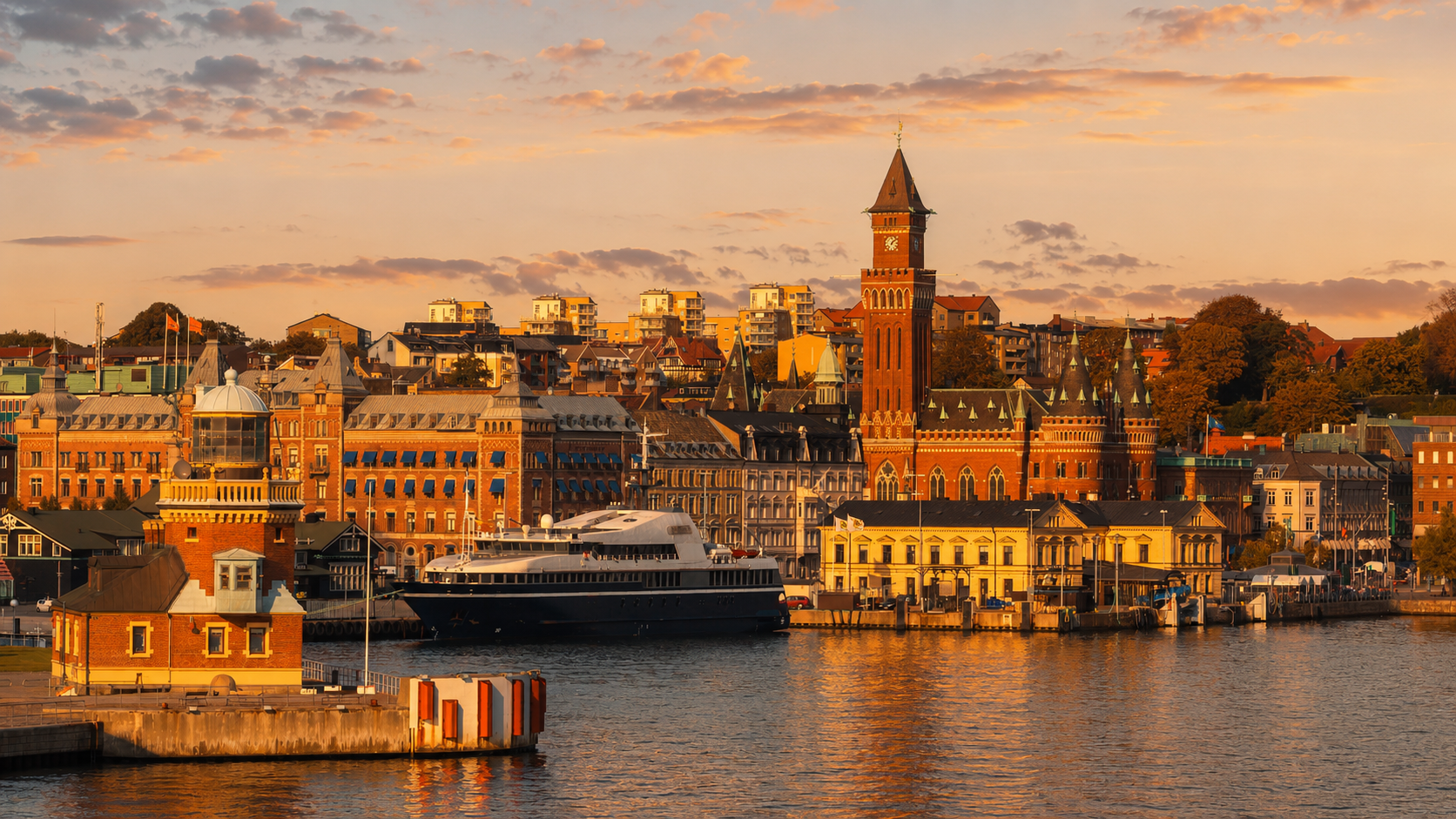
Malmö Travel Guide: Sweden’s Most Dynamic Waterfront City
Malmö is a city that reveals itself through contrasts. The sound of bicycles rolling across cobblestone streets blends with the hum of modern trams and waterfront cafés, while centuries-old half-timbered buildings stand only minutes away from bold contemporary architecture. Arriving in Malmö, it quickly becomes clear that this is not simply Sweden’s third-largest city—it is a place where history, innovation, and everyday life meet naturally.
Walking through the city feels effortless. The compact center encourages exploration on foot, and each neighborhood offers its own distinct atmosphere. Morning light reflects off the canals, locals gather at outdoor cafés regardless of the season, and the salty breeze from the Öresund Strait is never far away. Malmö's international character is immediately noticeable, shaped by decades of cultural diversity and strengthened by its close connection to Copenhagen, just across the iconic Öresund Bridge. The result is a destination that combines Scandinavian design, rich history, creative cuisine, and a relaxed pace of life without losing the energy of a growing European city.
 Photo by Karl Hörnfeldt on Unsplash
Whether you are interested in medieval landmarks, innovative urban planning, vibrant food markets, or seaside parks, Malmö offers an experience that feels authentic and refreshingly accessible.
Discover Malmö's Rich History and Cultural Heritage
Malmö's story stretches back to the late 13th century, when it developed as an important trading port under Danish rule. For centuries, the city prospered through the herring trade before becoming part of Sweden in 1658 following the Treaty of Roskilde. Traces of both Danish and Swedish heritage remain visible throughout the city, giving Malmö a unique cultural identity.
One of the city's defining landmarks is Malmö Castle, a Renaissance fortress surrounded by peaceful gardens and museums that tell the story of southern Sweden. Nearby, St. Peter's Church stands as one of the country's finest examples of Baltic Gothic architecture, while the historic district around Lilla Torg invites visitors into a maze of beautifully preserved buildings where restaurants and cafés now occupy centuries-old merchant houses. Rather than feeling frozen in time, these historic spaces remain fully integrated into modern city life.
Exploring Malmö's Modern Architecture and Waterfront
 Photo by Karl Hörnfeldt on Unsplash
Few European cities have transformed their industrial waterfront as successfully as Malmö. The Western Harbour district, once dominated by shipbuilding, has become an internationally recognized example of sustainable urban development.
 Photo by Marek Lumi on Unsplash
The Turning Torso, Scandinavia's tallest building, rises above the skyline with its twisting silhouette and serves as the city's architectural icon. Around it, waterfront promenades, swimming platforms, parks, and residential neighborhoods create an environment where people spend long summer evenings by the sea. Walking here offers continuous views across the Öresund toward Copenhagen, with ferries, sailboats, and the bridge creating an ever-changing backdrop.
The city's investment in green spaces, cycling infrastructure, and environmentally conscious design has earned Malmö recognition as one of Europe's leading sustainable cities.
Life Around Stortorget, Lilla Torg, and Malmö's Neighborhoods
The heart of Malmö revolves around its historic squares. Stortorget, the city's oldest public square, remains an important meeting place surrounded by elegant historic buildings and lively cafés. Just around the corner, Lilla Torg creates a more intimate atmosphere where outdoor dining continues well into the evening during warmer months.
Beyond the center, neighborhoods each reveal their own personality. Möllevången is known for its multicultural food scene, colorful produce markets, independent shops, and creative energy. Gamla Väster offers quiet streets lined with pastel-colored houses and boutique stores, while Ribersborg combines urban living with long beaches that attract swimmers throughout the year—including winter bathers who continue a beloved Scandinavian tradition.
Food, Dining, and Malmö's Culinary Scene
Malmö has developed into one of Sweden's most exciting culinary destinations. Influences from across the world blend naturally with Nordic ingredients, creating a dining scene that feels both innovative and approachable.
The Malmö Saluhall food market showcases local producers alongside international kitchens, making it easy to sample everything from freshly baked sourdough and artisan cheeses to Middle Eastern specialties and contemporary Scandinavian cuisine. Throughout the city, independent cafés serve exceptional coffee alongside Swedish pastries, while waterfront restaurants offer seafood caught from nearby waters.
This diversity reflects the city's multicultural population, with more than 180 nationalities contributing to Malmö's evolving food culture.
Geography, Climate, and the Best Time to Visit Malmö
Located in southern Sweden in the region of Skåne, Malmö enjoys one of the country's mildest climates. The city's position along the Öresund Strait gives it relatively moderate winters and pleasantly warm summers compared with many other parts of Sweden.
Late spring brings flowering parks and longer daylight hours, while summer offers outdoor festivals, beach life, and bustling café terraces. Early autumn provides comfortable temperatures and fewer crowds, making it an excellent season for sightseeing. Even winter has its appeal, with Christmas markets, cozy restaurants, and crisp walks along the waterfront creating a distinctly Scandinavian atmosphere.
Because the city is compact and well connected by public transport and cycling paths, Malmö remains easy to explore throughout the year.
Language, Currency, and Practical Information
Swedish is the official language, although English is spoken fluently by the vast majority of residents, making communication straightforward for international visitors. The local currency is the Swedish krona (SEK), and while cash is accepted in some places, Malmö is largely a cashless city where card and mobile payments are standard.
With a population of approximately 370,000 residents, Malmö continues to grow as one of Scandinavia's most diverse urban centers. Its international outlook, efficient transport network, and direct rail connection to Copenhagen Airport make it an exceptionally convenient destination for both short city breaks and longer stays exploring southern Sweden.
Why Malmö Should Be on Your Sweden Itinerary
Malmö succeeds by being comfortable in its own identity. It preserves medieval streets without becoming a museum, embraces contemporary architecture without sacrificing character, and welcomes influences from around the world while remaining unmistakably Scandinavian. From quiet mornings beside the canals to lively evenings in bustling squares, the city offers an experience that feels genuine, modern, and deeply connected to its history. For travelers seeking a Swedish destination that balances culture, design, food, and coastal living, Malmö leaves a lasting impression long after the journey ends.
Malmö Active Holiday Guide
1) Sport & Action
Kitesurfing
- Lomma Beach (15 km north) – A wide sandy beach with shallow water, making it one of southern Sweden's best beginner-friendly kitesurfing locations. Reliable southwest winds are common. Equipment rental and lessons are typically available during the season. Rental: 700–1,200 SEK/day, lessons 1,200–2,000 SEK.
- Habo Ljung – A more open coastline offering stronger wind and slightly more challenging conditions, popular with intermediate riders.
- Ribersborg ("Ribban") – Malmö's city beach with calm waters for swimming and paddleboarding. Kitesurfing is only possible under certain local regulations and wind conditions, so always verify before launching.
Windsurfing & Wing Foiling
- Lomma and Habo Ljung are the primary local spots. Wing foil rentals generally cost 800–1,500 SEK/day.
SUP & Kayaking
- Ribersborg – Protected waters with views of the Öresund Bridge and Copenhagen skyline. SUP rental typically 200–350 SEK/hour, kayak 250–450 SEK/hour.
Cycling Malmö is one of Europe's most bicycle-friendly cities, with an extensive network of separated bike lanes and mostly flat terrain, making cycling the easiest way to explore.
Outdoor Fitness
- Ribersborg promenade offers outdoor gyms, running paths, and swimming opportunities.
- Pildammsparken – Large urban park ideal for running and bodyweight training in a peaceful green setting.
2) Excursions & Discoveries
Lund (20 minutes by train) A charming medieval university city with cobbled streets, the impressive Lund Cathedral, botanical gardens, and lively cafés. Train: 70–120 SEK each way.
Copenhagen (35–40 minutes) Cross the iconic Öresund Bridge to experience world-class museums, Nyhavn, Tivoli Gardens, and vibrant neighborhoods. Train from Malmö Central: approximately 150–180 SEK each way depending on ticket type.
Falsterbo & Skanör Beautiful coastal villages known for white sandy beaches, bird migration, colorful beach huts, and excellent wind conditions.
Kullaberg Nature Reserve One of Sweden's most dramatic coastlines featuring cliffs, sea caves, hiking trails, and excellent sea kayaking opportunities.
Ale's Stones (Ales Stenar) A spectacular Viking-era stone monument overlooking the Baltic Sea with sweeping coastal views.
3) Hiking
Skrylle Nature Reserve
- Start: Skrylle Visitor Centre
- Distance: 5–10 km
- Elevation: 80–150 m
- Difficulty: Easy–Moderate
- Terrain: Forest trails
- Highlights: Dense beech forest, lakes, wildlife, and peaceful scenery.
Torup Recreation Area
- Start: Torup Castle
- Distance: 6–12 km
- Elevation: Minimal
- Difficulty: Easy
- Terrain: Gravel paths and woodland
- Highlights: Historic castle, old forests, picnic areas.
Kullaberg Coastal Trail
- Start: Mölle
- Distance: 10–16 km
- Elevation: 350–500 m
- Difficulty: Advanced
- Terrain: Rocky coastal paths
- Highlights: Dramatic cliffs, sea views, caves, and lighthouse scenery.
4) Cycling Routes
Malmö Coastal Loop
- Distance: 22 km
- Profile: Flat
- Surface: Asphalt
- Difficulty: Easy
- Experience: Waterfront paths passing Ribersborg, Västra Hamnen, and Turning Torso.
Malmö–Lomma
- Distance: 28 km round trip
- Profile: Flat
- Surface: Asphalt
- Difficulty: Easy
- Experience: Scenic coastline with beaches and cafés.
Malmö–Falsterbo
- Distance: 65–75 km
- Profile: Mostly flat
- Surface: Road
- Difficulty: Moderate
- Experience: Open farmland, nature reserves, sandy beaches, and picturesque villages.
5) Culinary Experiences
Malmö offers one of Scandinavia's most diverse food scenes, strongly influenced by Swedish, Middle Eastern, and international cuisine.
Typical dishes
- Swedish meatballs
- Toast Skagen
- Herring
- Smoked salmon
- Fresh seafood
- Falafel (a local specialty thanks to Malmö's renowned Middle Eastern food culture)
- Cinnamon buns and cardamom buns
Dining districts
- Lilla Torg – Historic square with lively outdoor dining and upscale restaurants.
- Möllevången – Multicultural neighborhood famous for authentic Middle Eastern food, affordable eateries, and vibrant nightlife.
- Västra Hamnen – Modern waterfront district with cafés and contemporary dining overlooking the sea.
Typical prices
- Breakfast: 90–180 SEK
- Lunch special: 130–190 SEK
- Casual dinner: 180–350 SEK
- Fine dining: 700–1,500+ SEK
- Coffee: 35–55 SEK
- Beer: 75–110 SEK
- Glass of wine: 95–150 SEK
- Bottle of wine: 350–900 SEK
Reservations are recommended on weekends and during summer for popular restaurants.
6) Season & Timing
May–September
- Best for cycling, kayaking, SUP, beach activities, and city exploration.
- Average temperatures: 18–25°C.
June–August
- Peak season with long daylight hours and ideal outdoor conditions.
Autumn
- Excellent hiking and cycling with colorful forests.
Winter
- Mild by Scandinavian standards.
- Good base for city breaks rather than snow sports.
Wind Sports
- Best during spring and autumn when stronger winds are frequent.
7) Equipment & Rentals
Rental availability is excellent throughout Malmö and nearby coastal areas.
Typical prices:
- City bike: 150–350 SEK/day
- E-bike: 350–600 SEK/day
- Road bike: 450–900 SEK/day
- SUP: 200–350 SEK/hour
- Kayak: 250–450 SEK/hour
- Kitesurf equipment: 700–1,200 SEK/day
- Lessons: 1,200–2,000 SEK
Advance booking is strongly recommended, especially during summer weekends and holiday periods. Bikes, watersports equipment, instructors, and rental cars can sell out quickly, and booking ahead generally provides better availability and pricing.
8) Logistics
Nearest airports
- Copenhagen Airport (CPH) – 30 km, about 20–25 minutes by direct train, making it the most convenient international gateway.
- Malmö Airport (MMX) – 30 km, about 30–40 minutes by airport bus or taxi.
Public transport
- Skånetrafiken buses and trains connect the city and surrounding region efficiently.
- Single city ticket: typically around 32–40 SEK.
- Regional tickets available for excursions.
Car rental Useful for exploring Falsterbo, Kullaberg, and Skåne countryside. Typical rates:
- 500–1,000 SEK/day, depending on season.
Parking in central Malmö is paid, while many suburban and nature destinations provide inexpensive or free parking.
If traveling in summer or planning excursions around Skåne, booking trains, rental cars, and specialty equipment in advance is advisable.
9) Shopping
Södergatan
Malmö's main pedestrian shopping street featuring Swedish fashion, lifestyle stores, and international brands.
Emporia
One of Scandinavia's largest shopping centers near Hyllie, known for its striking architecture and broad mix of fashion, sports, electronics, and homeware.
Davidshall
A stylish district filled with independent boutiques, Scandinavian design shops, vintage stores, and local galleries.
Outdoor & Sports
Look for stores carrying brands such as:
- Fjällräven
- Haglöfs
- Peak Performance
- Houdini Sportswear
- Icebug
- Craft
- Silva
Local Products
- Swedish crystal (Kosta Boda, Orrefors): 300–2,000+ SEK
- Scandinavian wool products (Klippan): 300–1,200 SEK
- Swedish outdoor clothing: 800–5,000 SEK
- Specialty coffee from local roasters: 120–180 SEK/bag
- Swedish chocolates (Marabou, Malmö Chokladfabrik): 40–150 SEK
- Local craft gin and non-alcoholic artisan beverages where available.
Notice: Prices, transport conditions, healthcare access, regulations, opening hours, and public services may change over time. Travelers should verify important details with official local sources before making final travel decisions.
Best Day Trips from Malmö: 10 Scenic Excursions Within 1.5 Hours
1. Lund – Medieval Streets and a Lively University Atmosphere
About 20 minutes by car, Lund offers a completely different pace from the coast. The narrow cobbled lanes, centuries-old buildings, and thriving café culture create a city that feels compact yet full of character. Wander between the cathedral, quiet courtyards, independent bookshops, and leafy parks before settling into one of the cafés that fill the historic center.
Public transport is excellent, with frequent regional trains taking around 10–15 minutes to Lund Central Station. Nearly everything is within easy walking distance, making this one of the easiest car-free excursions.
2. Söderåsen National Park – Deep Forests and Dramatic Ridges
The drive takes about one hour, passing farmland before the landscape suddenly rises into wooded hills and steep valleys that surprise many first-time visitors to southern Sweden. Walking the trails through beech forests, especially around Skäralid, feels far removed from the flat terrain around Malmö.
By public transport, expect around 1.5–2 hours using train and bus connections. The park is accessible without a car, although driving allows much greater flexibility to explore different trailheads.
3. Kivik and Österlen – Orchards, Coastal Views and Small Art Galleries
After around 1 hour and 30 minutes on the road, the scenery changes from open agricultural land to rolling hills, apple orchards, fishing harbors and quiet beaches. Kivik has a relaxed rhythm, particularly outside the busiest summer weeks, and the surrounding roads are enjoyable to drive, especially during the apple harvest in autumn.
Public transport usually requires about 2.5–3 hours with train and bus transfers, making a car the far more practical option.
4. Ales Stenar – Sweden's Stone Ship Above the Baltic Sea
Reaching Kåseberga takes about one hour by car. From the parking area, it's an easy walk uphill to the ancient stone monument overlooking the sea. Visiting early in the morning or later in the evening brings softer light and a quieter atmosphere, when the wind and waves become the main soundtrack.
Public transport takes roughly 2 hours by train and bus, followed by a short walk. It is feasible without a car, although journey times are considerably longer.
5. Ystad – Half-Timbered Houses and Seaside Walks
The drive lasts around one hour, ending in one of southern Sweden's most distinctive historic towns. Beyond the well-known medieval streets, Ystad rewards visitors with long promenades, small bakeries, and peaceful harbor views where ferries come and go throughout the day.
Frequent trains reach Ystad in about 50–55 minutes, and the station sits only a short walk from the old town, making it an excellent public transport destination.
6. Falsterbo and Skanör – Wide Beaches and Coastal Nature
Within 40–45 minutes by car, the landscape opens into sandy beaches, dunes and colorful beach huts. Even during summer, a short walk away from the main entrances often leads to quieter stretches of coastline. Birdwatchers particularly enjoy visiting during spring and autumn migrations.
Public transport generally takes around 1 hour and 15 minutes by regional bus. The beaches are within walking distance from the main stops, so no taxi is normally necessary.
7. Bosjökloster – Lakeside Gardens and Historic Surroundings
Driving about one hour brings you to Bosjökloster, where historic buildings overlook Lake Ringsjön. The gardens change noticeably with the seasons, while the lakeside setting encourages a slower visit than many larger attractions. It's an especially pleasant stop in late spring and early summer.
Public transport takes roughly 1.5–2 hours using train and bus combinations. The final stretch involves a moderate walk, so comfortable footwear is useful.
8. Glimmingehus – Scandinavia's Best-Preserved Medieval Castle
After around 1 hour and 20 minutes on the road, you'll reach a remarkably intact medieval fortress surrounded by open farmland. Thick stone walls, narrow staircases and defensive architecture provide a tangible sense of life in the late Middle Ages, while the surrounding countryside feels peaceful and spacious.
Public transport usually requires about 2.5 hours with bus transfers. Driving is significantly easier and allows time to combine the visit with nearby coastal villages.
9. Hovdala Castle – Forest Walks and Lakeside Trails
The drive to Hovdala takes approximately 1 hour and 20 minutes. Rather than focusing only on the castle, many visitors come for the walking trails through forests and around the lake, where it's easy to spend several relaxed hours. The surrounding landscape feels noticeably wilder than much of southern Skåne.
Public transport involves around 2 hours by train to Hässleholm followed by a local bus or taxi for the last stretch. A car offers much greater flexibility.
10. Ven Island – Cycling Between Villages and Sea Cliffs
Driving about 40 minutes to Landskrona, followed by the ferry crossing, creates a rewarding day out. Once on Ven, most visitors rent bicycles to explore quiet country roads, coastal viewpoints, small farms and cafés at an unhurried pace. Cars are generally not needed—or practical—on the island.
Public transport works very well: trains from Malmö reach Landskrona in around 30–35 minutes, followed by a local bus or walk to the ferry terminal. The ferry crossing takes about 30 minutes, making Ven one of the most enjoyable car-free excursions in southern Sweden.
Malmö – Good to Know Before You Go
Historical & Context Overview
Malmö was founded in the late 13th century (around 1275) as a fishing and trading settlement. It was part of Denmark until 1658, when it became Swedish under the Treaty of Roskilde. Today, it is Sweden's third-largest city with approximately 370,000 residents, while the wider metropolitan area has around 750,000–800,000 inhabitants. Malmö is part of the larger Öresund region together with eastern Denmark, making it one of Scandinavia's most integrated cross-border metropolitan areas. Nearby cities include Lund (≈95,000 inhabitants, 20 km northeast), Trelleborg (≈31,000, 30 km south), Helsingborg (≈115,000, 65 km north), and Copenhagen, Denmark (≈660,000 city population, about 40 km west across the Öresund connection).
Getting Around & Mobility
Malmö is compact and one of Europe's most bicycle-friendly cities.
- Most central destinations are within 2–5 km, making walking practical.
- Cycling from one side of the city centre to the other usually takes 10–20 minutes.
- Daily bicycle rental generally costs €15–25.
- Electric bicycles typically cost €25–40 per day.
- E-scooters are widely available, with typical prices around €1 to unlock plus €0.20–0.30 per minute (approximately €10–18 for a 30-minute ride).
- Car rental usually starts from €45–80 per day, excluding fuel and parking.
Cyclists are expected to use designated bike lanes, obey traffic lights, and signal before turning. Pedestrians should avoid standing in bike lanes, as cyclists travel quickly and locals expect paths to remain clear.
Public Transport & Taxis
Public transport consists mainly of buses and regional trains.
- A city bus ticket costs about €3.
- A 24-hour ticket costs around €7–9.
- Monthly city travel passes cost roughly €60–65.
Tickets are normally purchased via an app, ticket machines at major stations, or by contactless payment on many city buses. Regional trains connect Malmö efficiently with surrounding towns and Copenhagen.
Taxi fares typically include:
- Starting fare: €5–7
- City trip (5 km): €15–25
- Airport journey: €35–60, depending on destination and traffic.
Costs & Everyday Prices
Typical prices:
- Coffee: €3–5
- Pastry: €2–4
- Fast casual lunch: €10–14
- Restaurant dinner: €18–35
- Three-course dinner: €45–70
- Supermarket sandwich: €4–7
- 1.5 L bottled water: €1–2
- Grocery shopping for one day: €10–20
Sweden is generally cash-light, and virtually everything can be paid by card.
Food Culture & Eating Habits
Lunch is commonly eaten between 11:30 and 13:30, while dinner usually starts around 17:30–19:30, earlier than in many southern European countries.
Restaurants generally stay open until 21:00–23:00, although kitchens often close before the restaurant itself.
Vegetarian, vegan and gluten-free options are widely available. Tap water is routinely served free when dining unless bottled water is specifically requested.
Payments & Tipping Culture
Card payments dominate everyday life.
- Visa and Mastercard are accepted almost everywhere.
- Mobile payments are common among locals, though visitors typically use bank cards.
- Cash is accepted in some places but should not be relied upon.
Tipping is not expected. If service has been particularly good, rounding up the bill or leaving 5–10% is appreciated but entirely optional.
Safety
Malmö is generally safe for visitors.
Normal precautions include:
- Keep valuables secure in busy transport hubs.
- Lock bicycles carefully.
- Stay aware in nightlife areas late at night, particularly around closing time.
Violent crime rarely affects tourists, though occasional gang-related incidents occur in specific residential neighborhoods and generally do not target visitors.
Emergency number: 112.
Healthcare
Healthcare is excellent.
- Pharmacies are common throughout the city.
- Many pharmacies are open until evening, while a few operate longer hours.
- EU visitors should carry a European Health Insurance Card (EHIC).
- Travel insurance is recommended for everyone else.
Tap water is of excellent quality and perfectly safe to drink.
Practical Information
Typical opening hours
- Supermarkets: 07:00–22:00 (many larger stores)
- Smaller grocery stores: often 08:00–21:00
- Shopping centres: typically 10:00–20:00
- Restaurants: 11:00–22:00
- Cafés: 08:00–18:00
Public toilets are available in shopping centres, transport hubs and public facilities. Fees are commonly €0.50–1, although many locations provide free toilets.
Self-checkout is very common in supermarkets. Receipts are usually optional and may be printed only if requested.
The atmosphere is relaxed and international. Summer brings long daylight hours and lively outdoor life, while winter days are short, often windy and damp.
Weather:
- Spring: light jacket
- Summer: 18–25°C, occasionally warmer
- Autumn: cool, windy and rainy
- Winter: -2 to 5°C, often windy rather than heavily snowy
Because Malmö is close to the sea, wind can make temperatures feel noticeably colder than the thermometer suggests.
Pitfalls & Things to Be Aware Of
- Do not assume cash will be accepted everywhere.
- Cycle lanes are heavily used—standing or walking in them is one of the most common visitor mistakes.
- Restaurants often stop serving food before official closing time.
- Parking can be expensive, generally €1–4 per hour depending on location.
- Ticket inspections on buses and trains are frequent. Always ensure your ticket is valid before travelling.
- Sundays are quieter than weekdays, with some smaller shops operating shorter hours.
- Public transport is punctual, so arriving just a minute late may mean waiting for the next departure.
- Weather can change quickly, especially due to coastal winds, so carrying a light waterproof jacket is advisable year-round.
- During weekday morning (07:00–09:00) and afternoon (16:00–18:00) commuting hours, buses and trains can become crowded.
- If travelling onward to Denmark, remember that border checks may occasionally occur, so carry valid identification.
Notice: Prices, opening hours, transport services, regulations, and service availability may change over time. It is recommended to verify important details with official sources before travelling or using specific services.
A Local's Guide to Malmö: Waterfront Walks, Historic Streets, Modern Architecture & Quiet Corners
Malmö is a city that changes character throughout the day. Early mornings belong to cyclists, dog walkers, and people grabbing coffee before work. By late afternoon, parks fill with picnics, the harbor comes alive, and outdoor restaurants buzz well into the evening during the warmer months. Everything feels comfortably close—you can walk between medieval streets, contemporary architecture, beaches, and green parks without ever feeling rushed.
Gamla Staden (Old Town)
The historic center is compact and easy to explore on foot. Around Stortorget, Malmö's oldest square, grand Renaissance and Dutch-inspired buildings create an elegant backdrop, while nearby Lilla Torg feels more intimate, with half-timbered houses surrounding outdoor cafés and restaurants. Even outside peak season, it's a pleasant place to linger over coffee and watch the rhythm of the city.
Just a few minutes away, you'll find narrow streets lined with independent boutiques, bakeries, and small galleries that make wandering more rewarding than following a strict itinerary.
Malmö Castle (Malmöhus Slott)
One of Scandinavia's oldest surviving Renaissance castles sits beside a peaceful moat and parkland. Inside, several museums share the complex, covering local history, natural history, art, and maritime heritage. The surrounding gardens are particularly pleasant in spring and summer when locals spread blankets on the grass.
Kungsparken & Slottsparken
These neighboring parks form Malmö's green heart. Curving walking paths, old trees, ponds, flower gardens, and quiet lawns create a relaxed atmosphere just minutes from the city center. It's easy to forget you're in Sweden's third-largest city while sitting beside the water or watching swans drift through the canals.
Turning Torso & Västra Hamnen
The city's modern identity comes into focus in Västra Hamnen, a former industrial waterfront transformed into one of Sweden's most sustainable neighborhoods.
The twisting silhouette of Turning Torso dominates the skyline, but the surrounding district is equally interesting. Wide promenades follow the shoreline, contemporary apartment buildings mix with cafés and small parks, and people gather along the rocks to swim or simply watch ferries crossing the Öresund Strait.
At sunset, the light reflecting across the water often makes this one of the city's most peaceful places to end the day.
Ribersborg Beach (Ribban)
Only a short walk from the center, Ribersborg stretches for several kilometers along the coast. The beach itself is shallow and family-friendly, but many locals come simply to walk, jog, or enjoy the sea breeze.
The historic open-air bathhouse is especially popular year-round, with traditional Swedish saunas followed by a plunge into the sea—even during winter.
Möllevången
If you want to experience Malmö's multicultural side, spend time around Möllevångstorget.
Fruit stalls spill into the square, grocery stores display ingredients from around the world, and restaurants range from Middle Eastern and Balkan cuisine to Korean, Vietnamese, Ethiopian, and excellent falafel shops. The area feels energetic without losing its neighborhood character.
It's also one of the city's better places for independent bars and late-evening cafés.
Folkets Park
One of the world's oldest public parks still in use, Folkets Park blends green space with playgrounds, cafés, seasonal events, concerts, and outdoor seating. During summer, families, students, and locals naturally mix here throughout the day.
Moderna Museet Malmö
Housed inside a former power station with a striking modern extension, this contemporary art museum hosts rotating exhibitions by Swedish and international artists. Even the architecture alone is worth seeing.
Malmö Live
Near the harbor, Malmö Live combines concert halls, a hotel, conference spaces, and restaurants. The riverside promenade outside is ideal for an evening walk, especially when the city lights begin reflecting across the canal.
Day Trips Within 10 km
- Lomma Beach – A quieter sandy shoreline north of Malmö with calm water and a relaxed small-town atmosphere.
- Limhamn – A former fishing district with waterfront cafés, marinas, and pleasant walking paths.
- Sibbarp – Coastal parkland popular for swimming, picnics, and views toward the Øresund Bridge.
- Øresund Bridge viewpoints – Several spots along the coast provide impressive perspectives of the bridge connecting Sweden and Denmark.
Food & Coffee
Malmö has one of Sweden's strongest food scenes relative to its size.
Look for:
- Freshly baked Swedish pastries and sourdough at independent bakeries.
- High-quality falafel, widely considered among the best in Scandinavia.
- Seafood restaurants near the harbor.
- Seasonal Nordic tasting menus.
- Specialty coffee cafés where locals often spend unhurried afternoons working or meeting friends.
Best Time to Visit
Late May through early September brings long daylight hours, outdoor dining, swimming, festivals, and lively parks. Spring fills the city's gardens with blossoms, while autumn brings quieter streets and beautiful colors along the canals.
Winter is calmer but has its own appeal, especially around Christmas markets, candlelit cafés, and the contrast of steaming saunas beside the cold sea.
Hidden gems
- Beijers Park – A peaceful neighborhood park with mature trees, ponds, and far fewer visitors than the central parks.
- Scaniaparken – A waterfront green space where locals gather to watch sunsets over the Øresund, often with swimmers braving the sea year-round.
- Gamla Väster – A small district west of the Old Town where cobbled lanes, climbing roses, and colorful houses create a quieter atmosphere than the busier squares.
- S:t Pauli Cemetery – More like a botanical park than a traditional cemetery, with winding paths beneath old trees and remarkable stonework.
- The canals at dusk – Walking beside Malmö's canals in the evening, when the water reflects rows of historic buildings and cyclists quietly pass by, reveals one of the city's most relaxed and understated experiences.
Our recommended hotels
MJ’S
MJ’S is a boutique hotel on Mäster Johansgatan in Malmö's old centre. Its distinctive interiors and social atmosphere make it appealing to visitors who want a hotel with a lively personality and easy access to restaurants.
The bar and shared spaces form an important part of the experience. It is particularly suitable for a food-focused city break; travellers sensitive to evening activity should discuss room position with the hotel.
Scandic Triangeln
 Photo by Johan Jönsson (Julle) on Wikimedia Commons · CC BY-SA 4.0
Scandic Triangeln is a large city hotel beside Malmö's Triangeln shopping area and railway station. It is a practical option for shopping trips, family visits and travellers using trains to explore the region.
Restaurant and bar facilities, a gym and sauna provide space to spend time between outings. Family room categories are available; check the stated occupancy and bed arrangement when booking.
Teaterhotellet
Teaterhotellet is an independent hotel on Fersens väg, close to Malmö Opera and Malmö Konsthall. Its straightforward rooms and breakfast service suit visitors looking for a practical base in the city's cultural quarter.
The setting works particularly well for a theatre or concert trip. Paid parking is available by arrangement, so drivers should check availability before arrival.