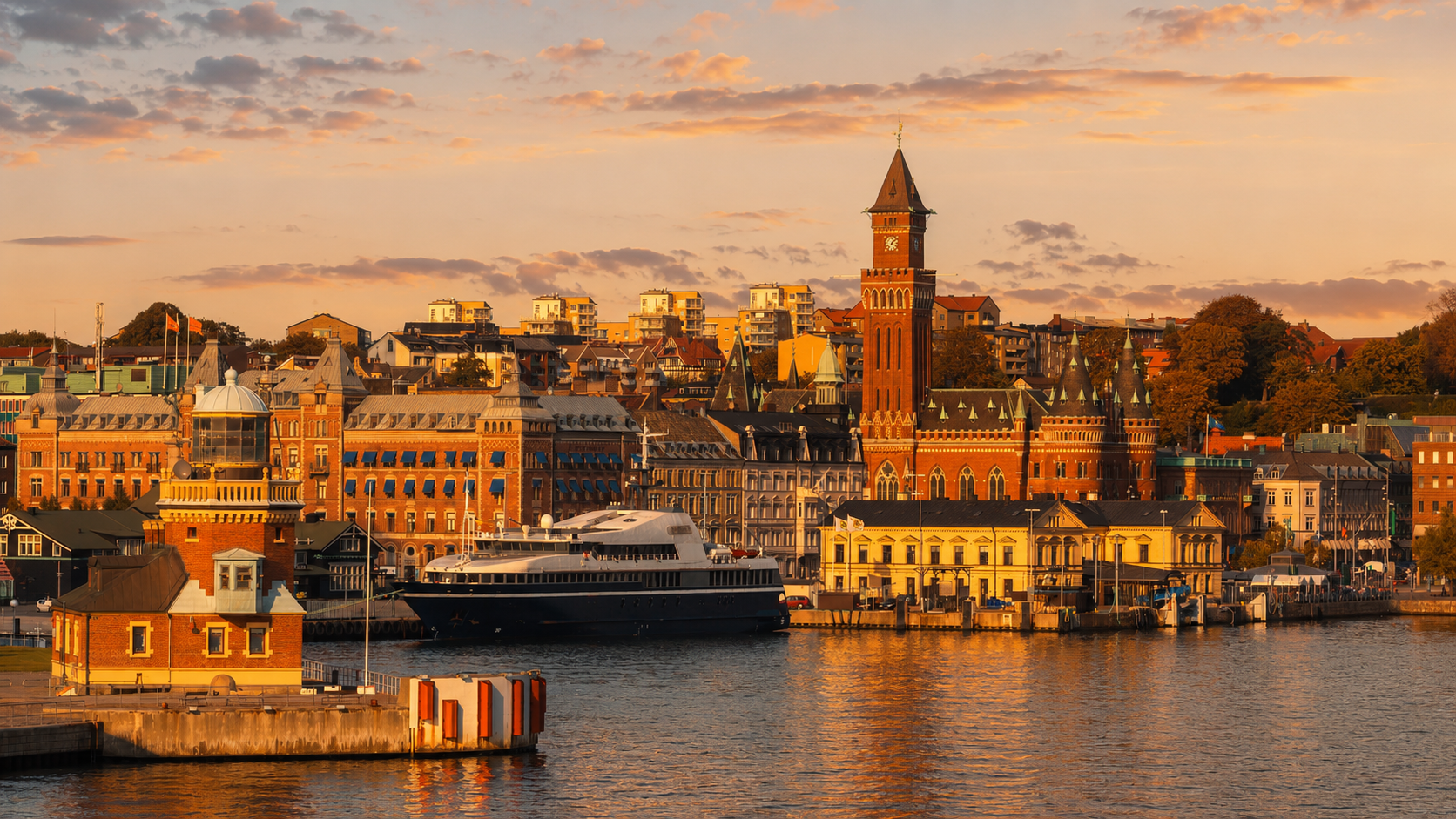
 Indre ByDistrict
Copenhagen
Hotels in Copenhagen
København
Overview
København, known in English as Copenhagen, is Denmark’s capital, spread around a harbour between Sjælland and Amager. Royal palaces, brick warehouses and narrow historic streets sit alongside contemporary waterfront architecture. Cycling, neighbourhood cafés and time outdoors are as much a part of a visit as the major sights. The city suits travellers interested in design, food and museums, with enough parks and waterfront walks to balance a busy sightseeing schedule.
Why Go
The appeal lies in combining familiar landmarks with everyday city life. Explore the colourful waterfront at Nyhavn, the royal surroundings of Amalienborg and the gardens of Rosenborg, then spend time in a neighbourhood bakery or beside the harbour. Tivoli adds historic amusement gardens close to the central station. Danish design and a food culture ranging from smørrebrød to ambitious tasting menus give the city depth beyond its postcard views.
 Photo by Nate Holland on Unsplash
Allow around three days for a first visit if you want time for both the central sights and neighbourhood exploration. A longer stay leaves room for museums, slower meals and trips beyond the city.
Best Time To Visit
Late spring and summer work well for walking, cycling and long evenings outdoors. Summer is especially appealing for waterfront life, while spring brings blossom and a gradual return to outdoor cafés. Early autumn can still suit outdoor exploration, but wetter, windier conditions become more likely as the season progresses. Winter offers a different kind of visit centred on museums, restaurants and cafés, with short daylight hours and cold weather to plan around. Pack layers and rain protection in any season.
Areas To Know
Indre By is the historic centre and a useful starting point for palaces, shopping and major sights. Christianshavn offers canals and waterside walks. Vesterbro combines restaurants, independent shops and nightlife, including the former meatpacking district, Kødbyen. Nørrebro is particularly rewarding for varied food, cafés and street life. Østerbro has a calmer residential atmosphere, while Frederiksberg, a separate municipality within the wider urban area, offers leafy streets and gardens. Nordhavn provides a contrasting view of modern waterfront development.
Getting Around
 Photo by Jose Manuel Alonso de Caso on Unsplash
Walk between nearby sights in the centre, then use the metro, buses and trains for longer journeys. Public transport links the airport with the city and connects the main neighbourhoods. Cycling is another practical option, but busy cycle lanes require attention and confidence. Choose accommodation with convenient public transport access rather than judging its location only by distance from Nyhavn. A car is usually unnecessary for a stay focused on the city.
 Photo by Lindsay Martin on Unsplash
Practical Notes
Build your itinerary around one or two areas each day to reduce backtracking. Balance paid attractions with parks, neighbourhood walks and the waterfront when planning your budget. Reserve ahead for a particular restaurant or experience that matters to your trip, and check individual attraction calendars before fixing your schedule. Leave some indoor options available for wet or windy days. Central visitor areas can feel busy; quieter residential streets often offer a more relaxed pace.
Copenhagen — Active Holiday Guide
Copenhagen is unusually strong for an active city break: superb cycling infrastructure, clean harbour water, kayaking and swimming in the urban core, large nature reserves within metro range, and even year-round artificial skiing. The terrain is flat, so it is better for endurance cycling and watersports than mountain adventure.
1) Sport & Action
Harbour kayaking — Copenhagen Harbour & Christianshavn canals. Paddling through the harbour gives you a water-level view of Copenhagen's modern architecture, historic warehouses and narrow canals. Kayak Republic operates centrally at Børskaj, while Kajakhotellet is another established equipment option. Expect roughly DKK 150–300 (€20–40) for a short rental/session and around DKK 350–650 (€47–87) for guided experiences, depending on duration.
CopenHill — urban skiing and running. This extraordinary artificial ski slope sits on top of Copenhagen's waste-to-energy plant, with city and Øresund views. The rooftop hiking/running route is free during opening hours. Skiing currently starts at DKK 150/hour, plus a DKK 50 reusable lift card and DKK 20 insurance; an adult full equipment package is another DKK 150 for one hour.
Amager Strandpark — SUP, swimming and wind sports. This long urban beach combines open Øresund water with a more protected lagoon. It is an excellent warm-season base for SUP and open-water swimming. For kitesurfing, experienced riders should look farther south toward Sydvestpynten/Dragør, where the exposed coast and shallow water provide much better wind-sport terrain.
Sydvestpynten — kitesurfing. Southwest Amager offers shallow coastal water and considerably more space than the inner-city waterfront. Conditions are wind-dependent, so check the current launch situation and local restrictions before rigging. Allow roughly DKK 800–1,300 (€107–174) for a private/semi-private introductory kite session and around DKK 400–700 (€54–94) for equipment rental where available; these are market ranges rather than verified fixed local rates.
Harbour swimming — Islands Brygge and designated harbour baths. Copenhagen's harbour culture is one of the city's highlights: you can cycle through the centre, stop for a swim and continue riding. Use designated bathing areas rather than simply entering the harbour anywhere.
2) Excursions & Discoveries
Dragør is my first choice for an active half-day. This remarkably preserved old fishing town has yellow houses, cobbled lanes and a harbour facing Øresund. Combine Copenhagen → Naturpark Amager → Dragør by bicycle for a much more interesting outing than simply taking the bus.
Helsingør & Kronborg Castle make an excellent full-day cultural excursion. Helsingør is a historic maritime town overlooking Sweden, while Kronborg provides the monumental fortress experience associated with Shakespeare's Hamlet. Direct trains from central Copenhagen take roughly 40–60 minutes depending on service.
Louisiana Museum of Modern Art, Humlebæk is the strongest art excursion. Its appeal is as much the setting as the collection: modern architecture, sculpture gardens and lawns overlooking Øresund. Humlebæk is approximately 45 minutes by train, followed by about a ten-minute walk. Allow roughly DKK 150–200 (€20–27) for museum admission unless covered by a city card; verify the current ticket price when booking.
Dyrehaven & Klampenborg are better if you want nature. Just north of Copenhagen, this huge historic deer park combines open grassland, ancient trees and roaming deer, yet remains easily reachable by train. Park access is generally free. It is excellent for running, walking and cycling.
Hornbæk is worth the longer journey in good summer weather. Around 55 km north of Copenhagen, it has a broad sandy beach and a much stronger seaside-resort feeling than the urban beaches. Public transport takes around 1.5 hours via Helsingør; driving is approximately one hour.
3) Hiking
Amarminoen — DR Byen → Dragør: 27 km, approximately 50–100 m elevation gain, moderate, mostly flat gravel paths, tracks and paved sections. This is Copenhagen's signature long walk, crossing wetlands, meadows, woodland and former military landscapes before reaching atmospheric Dragør. The official nature park confirms the 27 km distance.
Kalvebod Fælled loop — Naturcenter Amager: approximately 14 km, <50 m gain, easy–moderate, gravel/asphalt/natural tracks. Wide horizons, reed beds, grazing animals and birdlife make this feel surprisingly remote considering you arrived by metro. One officially marked Kløversti is 14 km.
Amager Fælled: approximately 8 km, negligible elevation, easy, gravel and natural trails. A compact wilderness-style walk through scrub, meadows, wetlands and lakes immediately beside the city. A guided version listed by the nature park covers about 8 km in two hours.
CopenHill: roughly 2–3 km depending on your approach/loops, approximately 80 m vertical, easy–moderate, engineered walking surface. It is short rather than wild, but the combination of industrial architecture and skyline views makes it uniquely Copenhagen. Walking access is currently free during operating hours.
4) Cycling Routes
Copenhagen → Kalvebod Fælled → Dragør → Copenhagen: approximately 45–55 km, almost completely flat, asphalt/gravel, moderate. This is my top ride: city cycleways give way to enormous wetlands and former military roads before you reach Dragør's old harbour. Naturpark Amager explicitly supports extensive cycling on its paved and gravel trail network.
Copenhagen → Klampenborg → Dyrehaven → Bellevue: approximately 30–40 km return, flat, road/gravel, easy–moderate. Ride north through affluent coastal districts, loop through the deer park and finish beside the Øresund. Excellent for a relaxed half-day.
Harbour Architecture Loop: approximately 15–25 km, essentially flat, paved cycleways, easy. Link Islands Brygge, Christianshavn, Refshaleøen and the waterfront for an urban ride dominated by bridges, contemporary architecture and harbour views.
Copenhagen → Louisiana/Humlebæk: approximately 75 km return, gently rolling, predominantly road, moderate. One of the best longer road rides, following the wealthy Øresund coast north before finishing at Louisiana's spectacular seaside setting. Train back if your legs are finished.
Standard city-bike rentals are typically around DKK 100–180 (€13–24)/day; better touring/e-bikes can run DKK 250–450 (€34–60)/day. Central options include Tropical Bikes Copenhagen and City Bike Adventures.
5) Culinary Experiences
Copenhagen is expensive but exceptionally good for food. Look for smørrebrød—open rye-bread sandwiches with combinations such as pickled herring, potato, egg, roast beef or fish—plus Danish pastries, quality sourdough, seafood, pork, seasonal vegetables and modern Nordic cooking.
For concentration of dining, explore Vesterbro and Kødbyen, where converted industrial buildings mix casual restaurants, bars and nightlife; Nørrebro, which has a younger multicultural food scene; Christianshavn, atmospheric around the canals; and the Inner City/Torvehallerne area for everything from market food to polished dining. Vesterbro's Istedgade/Vesterbrogade/Kødbyen corridor is particularly lively in the evening.
Budget roughly DKK 70–140 (€9–19) for breakfast, DKK 120–220 (€16–30) for lunch, DKK 200–400 (€27–54) for a casual dinner and DKK 800–2,000+ (€107–268+) per person for serious tasting-menu/fine dining.
Coffee is typically DKK 35–55, beer DKK 45–75, soft drinks around DKK 30–50, and restaurant wine roughly DKK 300–700+ per bottle. Try Danish craft beer and snaps/akvavit, particularly alongside traditional smørrebrød.
Casual restaurants often accept walk-ins, but reserve ahead for Friday/Saturday dinner and virtually always for destination-level Nordic restaurants.
6) Season & Timing
May–September is best overall. Expect long daylight, active waterfronts and the best conditions for cycling, SUP, kayaking and harbour swimming. July and August are busiest.
September is particularly good for an active trip: generally fewer peak-summer visitors while cycling and paddling remain viable, although wind and rain become less predictable.
For kitesurfing, autumn and spring can bring stronger wind, but cold-water equipment becomes increasingly important.
November–March is dark, cold and often windy rather than reliably snowy. Copenhagen is not a natural ski destination—CopenHill's synthetic surface is precisely why skiing is possible year-round.
7) Equipment & Rentals
Cycling equipment is extremely easy to obtain. Basic bikes typically run DKK 100–180/day, performance/touring bikes roughly DKK 200–350, and e-bikes approximately DKK 250–450.
For kayaking, try Kayak Republic or Kajakhotellet. Naturcenter Amager also offers bicycles and outdoor equipment and is particularly convenient for exploring Kalvebod Fælled.
CopenHill currently charges DKK 150/hour for ski time, with the adult full equipment package another DKK 150 for one hour, DKK 250/2h or DKK 300/3h.
Pre-book equipment and key services whenever possible, especially bikes, kayaks, SUPs, kite equipment, cars, ski equipment and instructors. Copenhagen has substantial capacity, but availability fluctuates with summer weekends, weather and events. Last-minute booking can mean fewer sizes/models, higher prices or complete unavailability. For specialist kite equipment, bringing your own gear is sensible if kiting is a major purpose of the trip.
8) Logistics
Copenhagen Airport (CPH) is the obvious gateway, only about 8 km from central Copenhagen. Metro/train journeys are typically around 15 minutes, making this one of Europe's easiest airport-to-city transfers. A normal public-transport airport journey requires the appropriate zone ticket; check the current fare in the Rejsebillet app, which automatically determines the required zones. Budget approximately DKK 30–40 (€4–5.50) for public transport and roughly DKK 250–400 (€34–54) for a taxi depending on destination and traffic.
Inside Copenhagen, bike + metro + train is the ideal combination. A car is unnecessary for most visitors and parking can be expensive and inconvenient. The yellow harbour buses are also integrated into the regular public-transport system.
Naturpark Amager is particularly accessible: public transport serves the park and parking is available near several trailheads. Helsingør and Humlebæk/Louisiana are straightforward train excursions, making car rental unnecessary for them as well.
Consider the Copenhagen Card if you intend to combine museums, castles and substantial public transport; it covers 80+ attractions and regional public transportation, including airport transport.
Book rental cars, specialist bikes and watersport sessions before arrival during busy periods rather than relying on same-day availability.
9) Shopping
Strøget + Købmagergade form the central shopping axis. They are touristy in places, but side streets contain excellent Danish design, fashion and specialist stores. For useful outdoor shopping, nearby Frederiksborggade is especially convenient: Friluftsland, Fjällräven and Spejder Sport are concentrated in this area.
Look for technical products from Fjällräven, Patagonia, Arc'teryx, Helly Hansen and Salomon; a quality daypack typically costs around DKK 600–1,500, while technical shells commonly run DKK 1,500–4,000+.
For Danish lifestyle purchases, look for Rains waterproof bags/jackets, HAY home accessories, Georg Jensen design and jewellery, Royal Copenhagen porcelain and LEGO products. Smaller design objects can start around DKK 100–300, while premium porcelain, jewellery and furniture rapidly move into the thousands.
Jægersborggade and the wider Nørrebro area are better for independent shopping—small fashion labels, ceramics, speciality food and contemporary Copenhagen street culture—while Vesterbro/Istedgade mixes fashion, design and lifestyle shops with cafés and nightlife.
For edible purchases, look for Danish rye bread mixes, quality liquorice, Anthon Berg chocolates, Summerbird chocolate, specialty coffee and Danish preserves. Expect roughly DKK 30–80 for good liquorice/confectionery, DKK 60–150 for premium chocolate and DKK 80–150 for a bag of specialty coffee.
For an active traveler, 3–4 days works particularly well: one urban cycling/kayaking day, one Naturpark Amager–Dragør adventure, one culture/food day, and—if you have the fourth day—a coastal excursion to Louisiana, Dyrehaven or Helsingør.
Notice: Prices, transport conditions, healthcare access, regulations, opening hours, and public services may change over time. Travelers should verify important details with official local sources before making final travel decisions.
1. Louisiana Museum of Modern Art – Copenhagen Day Trip for Art and Coastal Scenery
Louisiana
Louisiana Web Address: Gl Strandvej 13, 3050 Humlebæk, Danmark Phone: +4549190719
Around 40 minutes by car north of Copenhagen, Louisiana sits beside the Øresund in Humlebæk, where modern art, sculpture gardens and sea views are deliberately woven together. The strongest part of a visit is often moving between gallery rooms and the grounds: one moment you are inches from a major artwork, the next you are outside beneath old trees looking across the water toward Sweden.
Allow several hours rather than treating it as a quick museum stop. Late afternoon is particularly good, especially on days with evening opening, when the gardens become quieter and the changing light over the Sound becomes part of the experience.
Without a car: This is one of Copenhagen's easiest excursions by public transport. Direct trains from Copenhagen Central reach Humlebæk in about 40–45 minutes, followed by roughly a 10–15-minute walk to the museum.
2. Kronborg Castle and Helsingør – Historic Road Trip from Copenhagen
Kronborg
Kronborg Web Address: Kronborg, 3000 Helsingør, Danmark Phone: +4549213078
The drive north takes approximately 55–65 minutes, ending where Zealand narrows dramatically toward Sweden. Kronborg occupies that strategic point, and its position explains far more about the castle than simply knowing it as the setting associated with Hamlet.
Walk around the ramparts before disappearing into the darker passages beneath the castle. Helsingør's harbour also makes this an unusually satisfying excursion because ferries are constantly crossing the narrow water to Sweden; Helsingborg appears remarkably close on the opposite shore.
Without a car: Direct regional trains from Copenhagen to Helsingør generally take about 55 minutes. From Helsingør station, expect roughly 15–20 minutes on foot to Kronborg. It works exceptionally well as a car-free day trip.
3. Frederiksborg Castle – Copenhagen Road Trip to Hillerød
Frederiksborgs slott
Frederiksborgs slott Web Address: Frederiksborg Slot 10, 3400 Hillerød, Danmark Phone: +4548260439
Within roughly 45 minutes by car from Copenhagen, the urban landscape gives way to North Zealand and Hillerød. Frederiksborg rises directly from the castle lake, and arriving across the water is considerably more memorable than simply approaching another historic building through a car park.
The interiors are dense with Danish royal history, but leave enough time for the formal gardens and paths around the lake. An early arrival gives you a noticeably calmer experience before tour groups fill the principal rooms.
Without a car: S-trains connect Copenhagen with Hillerød in approximately 40–45 minutes. From the station it is around 20 minutes on foot, or a short local-bus journey.
4. Roskilde and the Viking Ship Museum – Easy Cultural Excursion from Copenhagen
Vikingaskeppsmuseet
Vikingaskeppsmuseet Web Address: Vindeboder 12, 4000 Roskilde, Danmark Phone: +4546300200
Roskilde is only about 35–45 minutes by car west of Copenhagen, yet the atmosphere around its fjord feels substantially removed from the capital. The Viking Ship Museum is particularly rewarding because the story does not end with archaeological remains displayed behind glass: traditional boatbuilding and reconstructed vessels bring the maritime technology into the present.
The waterfront is best explored slowly. In warmer months, spend time outside around the boatyard and harbour rather than rushing immediately back toward the centre.
Without a car: Trains from Copenhagen Central can reach Roskilde in roughly 22–30 minutes. From Roskilde station, walk about 20–25 minutes downhill toward the fjord or use a local bus. Public transport is actually more convenient than driving for many visitors.
5. Stevns Klint – Copenhagen Coastal Road Trip
Stevns klint
Stevns klint Web Address: Boesdalsvej 14, 4673 Rødvig Stevns, Danmark Phone: +4530342279
After approximately one hour by car southeast of Copenhagen, Zealand abruptly ends in pale cliffs above the Baltic. Stevns is less about standing at a single viewpoint and more about walking along the cliff landscape, where fields seem to run almost to the sea.
Højerup is a particularly atmospheric section, with the old church perched remarkably close to the eroded cliff edge. Bring shoes suitable for uneven paths, and choose a clear day if possible—the coast feels entirely different when wind and low cloud arrive from the Baltic.
Without a car: It is possible, but substantially slower. Expect roughly 2½–3 hours each way, depending on connections, generally using trains via Køge followed by local rail and bus connections. For Stevns, a car is strongly preferable.
6. Fredensborg Palace – Quiet North Zealand Excursion from Copenhagen
Fredensborgs slott
Fredensborgs slott Web Address: Slottet 1B, 3480 Fredensborg, Danmark Phone: +4533186055
The journey to Fredensborg takes approximately 40–45 minutes by car, preferably approached through the greener roads of North Zealand rather than treating the trip simply as a motorway run.
Fredensborg has a different character from Denmark's more theatrical royal castles. The surroundings feel restrained and lived-in, with long avenues, mature trees and the large palace garden creating much of the appeal. Access to particular palace areas varies with royal use and season, so this works best for travelers who enjoy the wider cultural landscape rather than expecting an unrestricted castle tour.
Without a car: Trains usually require a connection and take approximately 50–65 minutes from central Copenhagen. Fredensborg station is within comfortable walking distance of the palace area.
7. Rungstedlund – Literary and Coastal Day Trip from Copenhagen
Karen Blixen Museum Rungstedlund
Karen Blixen Museum Rungstedlund Web Address: Rungsted Strandvej 111, 2960 Hørsholm, Danmark Phone: +4545571057
About 30–35 minutes north of Copenhagen by car, Rungstedlund was the home of Danish writer Karen Blixen. The attraction here is as much the setting as the literary history: old rooms, gardens, woodland and the nearby coast create an intimate counterpoint to Copenhagen's larger museums.
It is especially rewarding on a quiet weekday, when you can walk through the grounds without feeling that you are moving through a conventional visitor attraction. Pair the museum with a walk toward Rungsted harbour or along the coast.
Without a car: Take a coastal train to Rungsted Kyst, generally around 25–30 minutes, then walk approximately 15 minutes. It is an easy public-transport excursion.
8. Dragør – Short Seaside Road Trip from Copenhagen
Dragør Gamle Bydel
Dragør Gamle Bydel Address: Lodsstræde 1-17, 2791 Dragør, Danmark
Only around 25–30 minutes by car from central Copenhagen, Dragør feels surprisingly detached from the capital despite sitting on the same island. Low ochre houses, narrow lanes and the working harbour preserve the scale of an old maritime settlement rather than a Copenhagen suburb.
Do not restrict the visit to the central streets. Walk out toward the water and watch aircraft approaching Copenhagen Airport behind the coastal landscape—a strangely compelling contrast between old seafaring Denmark and one of Scandinavia's busiest transport hubs.
Without a car: Frequent buses connect Copenhagen with Dragør, normally taking approximately 40–50 minutes depending on the starting point and traffic. There is no railway station, but the bus makes this a straightforward car-free excursion.
9. Køge – Copenhagen Road Trip for Medieval Streets and the Zealand Coast
A slower alternative south of the capital
The drive to Køge takes roughly 40–45 minutes, bringing you to one of Zealand's most rewarding historic town centres. The pleasure is largely in its scale: timber-framed buildings, a broad market square and streets that still reveal the structure of an old Danish trading town.
Continue toward the harbour and coast rather than turning the visit into a purely architectural walk. Køge also works well as a lunch stop before continuing farther down the eastern side of Zealand.
Without a car: Regional and S-train connections make Køge very accessible, with journeys generally taking around 35–45 minutes from central Copenhagen. The historic centre begins within a few minutes' walk of the station.
10. Trelleborg Viking Fortress – Longer Copenhagen Road Trip into Western Zealand
Trelleborg - Museum of the Viking Age
Trelleborg - Museum of the Viking Age Web Address: Trelleborg Alle 4, 4200 Slagelse, Danmark Phone: +4541206399
Allow approximately 70–80 minutes by car from Copenhagen for the journey toward Slagelse and one of Denmark's most important Viking Age landscapes. Trelleborg is compelling because the geometry remains immediately understandable: the circular fortress plan and reconstructed environments reveal an organized, highly controlled side of Viking society that can be difficult to grasp from individual artifacts alone.
This is a particularly good choice for travelers with a car who want to move beyond the busiest Copenhagen excursion corridor. Summer generally brings the site most fully to life, while quieter shoulder-season days make the earthworks themselves easier to appreciate.
Without a car: Take a train from Copenhagen toward Slagelse, followed by local transport for the final section. Depending on connections, allow approximately 1½–2 hours each way. Services for the last stretch are less convenient than the main railway, so driving is considerably easier.
Best Copenhagen Day Trips and Scenic Road Trips at a Glance
For art and an effortless train journey, choose Louisiana. For castles and history, Kronborg or Frederiksborg are the strongest full-day options. For coastal walking, Stevns Klint gives you the greatest sense of leaving metropolitan Copenhagen behind.
If you have no car, Roskilde, Helsingør, Hillerød and Humlebæk are particularly easy. With a rental car, Stevns Klint and Trelleborg become much more attractive because you gain both flexibility and access to quieter stretches of Zealand between the major destinations.
Copenhagen — Good to Know Before You Go
Historical & Context Overview
Copenhagen developed as a harbour and trading settlement during the early Middle Ages. 1167 is traditionally quoted as its founding year, connected with Bishop Absalon, but archaeological evidence now shows that an established settlement existed by the 11th century, and activity in the area may go back considerably further.
Today Copenhagen Municipality has roughly 670,000 residents, while the continuous urban area is around 1.4 million and the wider Copenhagen economic/metropolitan region is considerably larger. Population definitions matter here because administratively separate municipalities blend almost invisibly into Copenhagen.
Nearby, Frederiksberg (~105,000) is effectively an enclave inside the city, while Roskilde (~53,000) is about 30 km west. Across the Øresund, Malmö (~365,000) is roughly 40 km away by road/rail. Denmark as a whole passed 6.03 million inhabitants in July 2026.
Copenhagen feels unusually compact for a capital: flat, orderly, highly bicycle-oriented and generally quiet outside nightlife areas. Distances that look significant on a map are often only a 15–30 minute walk or short bicycle ride.
Getting Around & Mobility
Walking: Copenhagen is exceptionally walkable. Much of the central area can be crossed in roughly 30–40 minutes, and many everyday trips are under 2–3 km.
Pedestrians should pay particular attention when crossing cycle lanes. The strip between pavement and road is frequently an active bicycle lane, not extra pedestrian space. Look in both directions before stepping onto it. Standing in a cycle lane while checking your phone or waiting to cross will annoy cyclists and can create a genuine collision risk.
Cycling: This is one of the easiest ways to travel. Expect roughly €10–€20 per day for a basic rental and more for electric bicycles, depending on rental period and provider.
Cycle lanes function much more like traffic lanes than recreational paths. Keep right, overtake on the left and signal before turning or stopping. At many intersections, cyclists making a left turn normally cross straight through first and then reposition for the second crossing rather than cutting diagonally across traffic. Cycling on pavements is prohibited.
Helmets aren't compulsory on ordinary bicycles, although they're recommended. Electric bicycles generally follow normal bicycle rules and standard pedal-assisted models are limited to assistance up to 25 km/h.
E-scooters: Available but more regulated than some visitors expect. A helmet is compulsory, only one person may ride, and normal traffic restrictions apply. Rental prices vary, but roughly €0.15–€0.30 per minute plus any unlocking charge is a reasonable planning range.
Cars: A car is usually more inconvenience than help for a central stay. Parking is limited and expensive, bicycle traffic requires considerable attention when turning, and public transport covers the city very effectively. For trips entirely within Copenhagen, walking, cycling and transit are normally simpler.
Public Transport & Taxis
Copenhagen has metro, suburban and regional trains, buses and harbour buses, integrated under the same zonal ticket system. Central public transport runs around the clock, although frequency drops significantly late at night.
The cheapest adult single ticket currently starts at DKK 24, approximately €3.20, covering two zones. An 8-zone ticket reaches DKK 60, around €8. A central-area 24-hour pass is DKK 100, approximately €13.40, with multi-day versions available.
Tickets can be purchased digitally or at machines at train and metro stations. One important detail: a normal single ticket is already activated when purchased. Don't buy a mobile ticket far in advance assuming you'll activate it later. The app displays its remaining validity; machine tickets show an expiry time.
There are no metro barriers at many points, which can make the system feel free-entry. It isn't. Inspections take place onboard, and travelling without the correct ticket can result in a substantial inspection fee: currently DKK 750 on trains/metro and DKK 1,000 on buses, roughly €100–€134.
The airport is only about 8 km from central Copenhagen. Public transport normally takes around 15–25 minutes, making taxis unnecessary for many visitors.
Taxis are expensive. For typical short central journeys, budget roughly €15–€30; an airport–central-city journey can commonly fall around €35–€50, depending on traffic, time and exact destination. Card payment is normal.
Costs & Everyday Prices
Copenhagen is expensive even by northern European standards. A realistic everyday range is:
| Item | Typical price |
|---|---|
| Coffee | €4–€6 |
| Bakery pastry | €3–€6 |
| Simple takeaway meal | €10–€17 |
| Budget restaurant meal | €15–€22 |
| Normal casual dinner | €25–€40 |
| Higher-quality dinner | €45–€70+ |
| Soft drink | €3–€5 |
| Draft beer in a bar | €6–€9 |
| Supermarket sandwich/light lunch | €5–€9 |
| Public transport single ticket | from ~€3.20 |
| 24-hour central transport pass | ~€13.40 |
Current local tourism information puts many budget meals around DKK 150 (about €20) or less, while more elaborate but still comparatively good-value dining can reach DKK 500 (about €67).
Supermarkets dramatically reduce food costs. A simple breakfast and lunch bought there can keep daily food spending around €15–€25, whereas eating every meal in cafés and restaurants can easily push food alone above €70–€100 per person per day.
Food Culture & Eating Habits
Breakfast tends to be relatively early and straightforward. Lunch commonly falls around 11:30–13:30, with dinner frequently around 18:00–20:00.
Danish food culture places considerable emphasis on bread, rye bread, dairy, fish, pork, potatoes and seasonal ingredients, but modern Copenhagen's everyday food scene is extremely international.
Restaurants generally don't expect tables to be occupied indefinitely after the meal, particularly at busy dinner periods. Some operate with specific seating times.
Tap water is routinely served or requested, although some restaurants may charge for filtered or bottled water rather than automatically bringing free water.
For popular casual restaurants, 12:00–13:30 and 18:30–20:00 are the busiest windows. Eating around 11:30 or after 20:30 often makes spontaneous seating easier.
Payments & Tipping Culture
Copenhagen is overwhelmingly card-first. Contactless cards and phone payments work for almost everything from cafés to supermarkets and ticket machines.
Carrying around €20–€40 equivalent in Danish kroner as emergency cash is plenty for most visitors; many travelers will never use it.
Denmark uses the Danish krone (DKK), not the euro. When a payment terminal offers to charge your card in euros instead of kroner, paying in DKK will usually avoid the merchant/payment processor's dynamic currency-conversion rate.
Tipping isn't compulsory. Service is incorporated into prices and wages. Rounding up or leaving around 5–10% for particularly good restaurant service is appreciated but isn't an expectation comparable to North America.
Some payment terminals still display a tip screen. Choosing zero isn't considered rude.
Safety
Copenhagen is generally a very safe capital, including for walking and public transport after dark.
The main tourist issue is opportunistic theft rather than violent crime. Copenhagen Police specifically warned again in summer 2026 that distraction and trick thefts increase during the tourist season. Phones sitting on café tables, open handbags and luggage in crowded transport environments are typical vulnerabilities.
Nightlife streets can become noisy and crowded on Friday and Saturday nights. Around bars, intoxicated cyclists are another practical reason to pay attention when crossing streets late at night.
A rare scam involves people claiming to be police officers and requesting immediate payment or inspecting wallets. Genuine police identification can be requested; the non-emergency police number is 114.
For immediate emergencies, call 112.
Healthcare
Denmark has a high-quality healthcare system.
For a life-threatening emergency, serious accident, fire or crime, call 112.
Hospital emergency departments aren't necessarily intended as unrestricted walk-in clinics for minor conditions. For non-life-threatening illness or injury, travelers may first need to contact the appropriate medical service and be directed to the correct facility.
EU/EEA travelers should carry a valid European Health Insurance Card (EHIC) where eligible. Travel insurance remains sensible because the EHIC doesn't cover every travel-related medical expense or repatriation.
Pharmacies are easy to find during daytime hours, but considerably fewer operate late at night.
Practical Information
Language: Danish. English proficiency is extremely high, particularly in Copenhagen.
Electricity: 230V / 50Hz. Denmark commonly uses Type K sockets, although Europlug Type C plugs fit many sockets.
Tap water: Safe to drink and of high quality. Buying bottled water for safety reasons isn't necessary.
Public toilets: Better than many visitors expect. Copenhagen has around 177 municipal public toilets, including 77 open 24 hours, and municipal facilities are free. Around 100 are accessible. Some outdoor toilets close in winter. Toilets that aren't 24-hour facilities commonly close around 19:00 in winter and 21:00 in summer.
A useful detail: several central toilets are underground, so they're surprisingly easy to walk straight past. Station areas, libraries, larger shopping environments and municipal facilities are usually the easiest fallback options.
Typical shopping hours: Roughly 10:00–18:00 Monday–Thursday, 10:00–19:00 Friday and shorter Saturday hours are common. Sunday opening is increasingly available among larger stores, supermarkets and central retailers, but smaller independent shops may close.
Supermarkets commonly stay open considerably later, often until 21:00–22:00, with some longer.
Restaurants generally serve lunch from around 11:30 and dinner from 17:30/18:00. Kitchens may close before the stated restaurant closing time.
Self-service: Supermarket self-checkouts are common. Keep your receipt until you've actually exited: some systems may require scanning it to open an exit gate.
Weather, Wind & What to Wear
Copenhagen's coastal position matters more than temperatures alone suggest. Wind can make otherwise moderate weather feel surprisingly cold.
Winter: approximately -2°C to 6°C. Expect darkness, wind, drizzle and occasional snow. Waterproof shoes, gloves and a wind-resistant outer layer are more useful than relying purely on a very thick coat.
Spring: roughly 5–15°C and highly changeable. Carry layers and something windproof.
Summer: commonly around 17–24°C during the day, occasionally warmer. Evenings beside the water can become cool quickly, so a light jacket remains useful.
Autumn: roughly 5–15°C with increasing rain and wind. Waterproof footwear becomes valuable.
Summer days are exceptionally long; winter days are correspondingly short. Copenhagen is noticeably livelier outdoors from May through September, whereas winter life shifts heavily indoors.
Pitfalls & Things to Be Aware Of
1. Don't walk in cycle lanes. This is probably the most common visitor mistake. Copenhagen cyclists often travel at 20–30 km/h and expect predictable behaviour.
2. Don't copy pedestrians crossing against a red light without looking carefully. Traffic rules and bicycle flows can differ from what you're accustomed to.
3. Understand your public-transport ticket before boarding. The zone system isn't always intuitive, and the absence of barriers doesn't remove the requirement for a valid ticket. Fines can reach roughly €100–€134 depending on transport mode.
4. Mobile single tickets activate immediately. Don't purchase one 30 minutes before you intend to travel merely to "have it ready."
5. Airport transport doesn't require an expensive taxi. The airport is unusually close and well connected; public transport generally reaches central Copenhagen in around 15–25 minutes.
6. Don't automatically accept euros on card terminals. Denmark isn't in the eurozone. When offered DKK or EUR billing, DKK will generally be the sensible card choice.
7. Restaurant prices accumulate quickly. Drinks, coffee and additional courses can turn a €25 meal into €40–€50 surprisingly easily. Check whether water is complimentary before repeatedly ordering it.
8. Sunday opening shouldn't be assumed. Large central shops and supermarkets are often open, but smaller stores can keep restricted hours. Current official visitor guidance explicitly recommends checking individual Sunday hours.
9. Be careful around bicycle lanes when leaving buses. Depending on the street design, you may have to cross an active cycle path between the bus and pavement. Look before stepping across.
10. E-scooter rules are enforced. Helmets are mandatory and carrying a second rider isn't allowed.
11. Keep phones off exposed café tables in busy areas. Distraction theft is sufficiently persistent that Copenhagen Police ran a dedicated warning campaign for foreign visitors again in 2026.
12. Copenhagen's apparent quietness can be misleading at night. Residential areas can be extremely peaceful, while streets concentrated around bars become loud on Friday and Saturday nights. If sleep matters, accommodation directly above nightlife venues can be problematic.
13. Wind changes the perceived temperature. A forecast of 10°C can feel much colder beside open water. A thin windproof layer is useful almost year-round.
14. Don't over-plan transport. Central Copenhagen is small. A journey that requires a connection on public transport may take little longer to walk, particularly for distances under about 2 km.
15. Parking a car can become a hidden expense. Between parking charges, restricted spaces and the concentration required around bicycles, renting a car solely for Copenhagen generally adds cost rather than convenience.
Bottom line
Copenhagen is easy, safe and exceptionally well organized, but also expensive. The easiest formula is to walk or cycle for short distances, use public transport for longer ones, pay in Danish kroner by card, use supermarkets strategically, drink the tap water and treat cycle lanes with the same seriousness you would treat roads.
For moderate-comfort travel excluding accommodation, €60–€100 per person per day is a useful planning range; restaurant-heavy days can easily exceed that.
Formal notice: Prices, opening hours, transport fares and conditions, regulations, healthcare arrangements and service availability can change. The figures above reflect information available in September 2026 or reasonable current ranges where exact prices vary. Travelers should verify important details with the relevant official service before making final travel or purchasing decisions.
Copenhagen — the best things to see, wander through and experience
Copenhagen is at its best when you resist treating it as a checklist. The centre is compact, cycling shapes the rhythm of almost every street, and some of the most memorable stretches are simply between places: brick façades reflected in canals, bakery windows fogged from the ovens, swimmers climbing out of the harbour and bicycles accumulating outside cafés.
The historic centre
Begin around Kongens Nytorv and Nyhavn, preferably early in the morning before the waterfront becomes busy. Nyhavn's brightly painted merchants' houses are familiar from photographs, but the quieter pleasure is walking beyond them along the harbour toward Amalienborg Palace.
Continue to the pale dome of Frederik's Church — the Marble Church — then walk through the royal quarter toward Kastellet. The Little Mermaid is nearby; she's surprisingly small, so think of her as part of a harbour walk rather than the destination itself.
For old Copenhagen at a slower pace, wander around Gråbrødretorv, Magstræde and Snaregade. These narrow streets give you more of the city's irregular medieval footprint than the broad shopping spine of Strøget.
Rosenborg Castle & King's Garden
Rosenborgs slott sits inside Kongens Have, one of the easiest places to spend a sunny hour without doing very much at all.
Go inside if Danish royal history interests you—the Crown Jewels are here—but leave time for the garden. Copenhageners use its lawns casually: bicycles against railings, takeaway coffee, people reading under the trees.
From here it's a short walk to Torvehallerne, Copenhagen's polished covered food market. It's useful for assembling an informal lunch: rye bread, cheese, pastries, coffee or smørrebrød rather than another sit-down meal.
Christianshavn
Cross the harbour into Christianshavn and the city changes almost immediately. Old warehouses stand beside houseboats; narrow canals disappear between ochre and red façades; cobbled side streets feel markedly calmer than the centre.
Climb the corkscrew spire of the Church of Our Saviour if the weather is clear. The final section curls around the outside of the tower, and the view across copper roofs, waterways and modern harbour architecture is one of Copenhagen's most satisfying.
Then simply follow the canal toward Christiania. The latter is more interesting as a living, complicated piece of Copenhagen's countercultural history than as a conventional attraction.
Ny Carlsberg Glyptotek
Ny Carlsberg Glyptotek is the museum I'd choose if you only visit one.
Part of the pleasure is the building itself: marble galleries open onto a lush central Winter Garden filled with palms, greenery and the sound of the fountain. The collections move from Egyptian, Greek and Roman antiquities into Danish art, French Impressionism, Gauguin, Rodin and Degas.
It works particularly well on a grey Copenhagen afternoon.
Vesterbro
Walk behind Central Station and the mood becomes less ceremonial. Vesterbro mixes old working-class streets with bakeries, wine bars, independent shops and restaurants.
Explore Istedgade, then turn into the smaller residential streets around Værnedamsvej. Continue towards the former Meatpacking District, Kødbyen, where butcheries and stark white industrial buildings now sit alongside restaurants, galleries and late-night bars.
This is a good part of town to leave unplanned and return to for dinner.
Nørrebro
For contemporary everyday Copenhagen, spend several hours in Nørrebro.
Start around Sankt Hans Torv, walk along Jægersborggade and Stefansgade, and stop whenever a bakery, coffee bar or small design shop catches your attention. The neighbourhood feels younger and more multicultural than the old centre.
Continue through Assistens Kirkegård—both cemetery and remarkably peaceful urban green space—toward Superkilen, whose red, black and green public spaces were designed around objects and references drawn from cultures represented in the surrounding neighbourhood.
Frederiksberg
Frederiksberg feels almost like a separate small city folded into Copenhagen. Broad avenues, handsome apartment buildings and mature trees replace Nørrebro's denser street life.
Spend an hour walking through Frederiksberg Gardens, particularly toward the palace above the lawns. Then cross into Søndermarken.
Beneath the park you'll find Cisternerne, Copenhagen's former underground water reservoirs, now used for contemporary art installations. The cool air, darkness, columns and damp acoustics make the space feel entirely removed from the city overhead.
Copenhagen's waterfront
One of the city's defining pleasures is how casually people use the water.
Walk or cycle around Islands Brygge, cross the harbour bridges and continue through Christianshavn. In warmer weather, harbour baths become social spaces rather than merely swimming facilities.
For a beach, head to Amager Strandpark, roughly 5 km from the centre. It has long stretches of sand, dunes, lagoons and broad views towards Øresund. Late afternoon is particularly good when the light begins to soften over the city.
Modern architecture
Copenhagen's newer architecture makes more sense when seen from a bicycle or boat.
Look at the Royal Danish Opera House, Black Diamond, BLOX, harbour bridges and newer residential districts around Nordhavn. The contrast between brick warehouses and precise contemporary buildings is central to the city's visual character.
For something stranger, go to CopenHill, where a recreational hill and ski slope rise over a working waste-to-energy plant. Even without skiing, the elevated walk gives you an unusual industrial panorama across Copenhagen and the Øresund.
Tivoli Gardens
Don't dismiss Tivoli as merely an amusement park.
After dark, when thousands of small lights appear between the gardens, old pavilions and rides, it becomes quite atmospheric. Go towards late afternoon, have dinner inside or nearby, and stay until evening rather than arriving in the middle of the day.
Eat Copenhagen properly
Leave room for bakeries. Copenhagen's contemporary baking culture is every bit as interesting as its restaurants.
Try a cardamom bun, tebirkes or kanelsnurre with coffee in the morning. At lunch, look for smørrebrød built on dense rye bread—herring, potato, egg and shrimp are classics. For dinner, the city ranges from ambitious New Nordic cooking to relaxed neighbourhood restaurants, particularly around Vesterbro, Nørrebro and Christianshavn.
The useful Copenhagen habit is to eat earlier than you might in Spain: kitchens and dining rooms generally settle into their evening rhythm well before 9pm.
Hidden gems
The Royal Library Garden — Slip behind the imposing government buildings around Slotsholmen and you find a remarkably quiet garden with clipped greenery, benches and a pond. It's excellent after visiting Christiansborg.
Kartoffelrækkerne — Rows of small 19th-century houses near the lakes, with bicycles leaning against walls and tiny front gardens. Walk through rather than making it a destination.
The Lakes at dusk — The three elongated lakes west of the centre become a local promenade in the evening. Runners, cyclists and people carrying takeaway coffee circle the water while the façades opposite catch the last light.
Søndermarken and Cisternerne — Pair the underground exhibition space with an aimless walk through the park above. The transition from dark subterranean chambers into trees and daylight is half the experience.
Refshaleøen — Former industrial land beyond Christiania where warehouses, creative projects and waterside spaces have gradually taken over the old shipyard landscape. Come by bicycle and explore it slowly.
Best way to structure a first visit: give Copenhagen three full days. Spend one around the historic centre, Rosenborg and the harbour; one crossing Christianshavn and exploring the waterfront; and one largely in Nørrebro, Frederiksberg and Vesterbro. Rent a bicycle once you're comfortable with Copenhagen's cycling etiquette—the distances suddenly become tiny, and the city starts to make much more sense.
Places in Copenhagen
Indre ByDistrict